Showing posts with label effective feedback. Show all posts

Saturday, August 23, 2014

A World Enough and Time

...and so begins...a written conversation series between husband (PhD and first year high school English teacher) and wife (NBCT English teacher w/11 years in HS classroom and currently trying to impact the profession from outside the classroom)
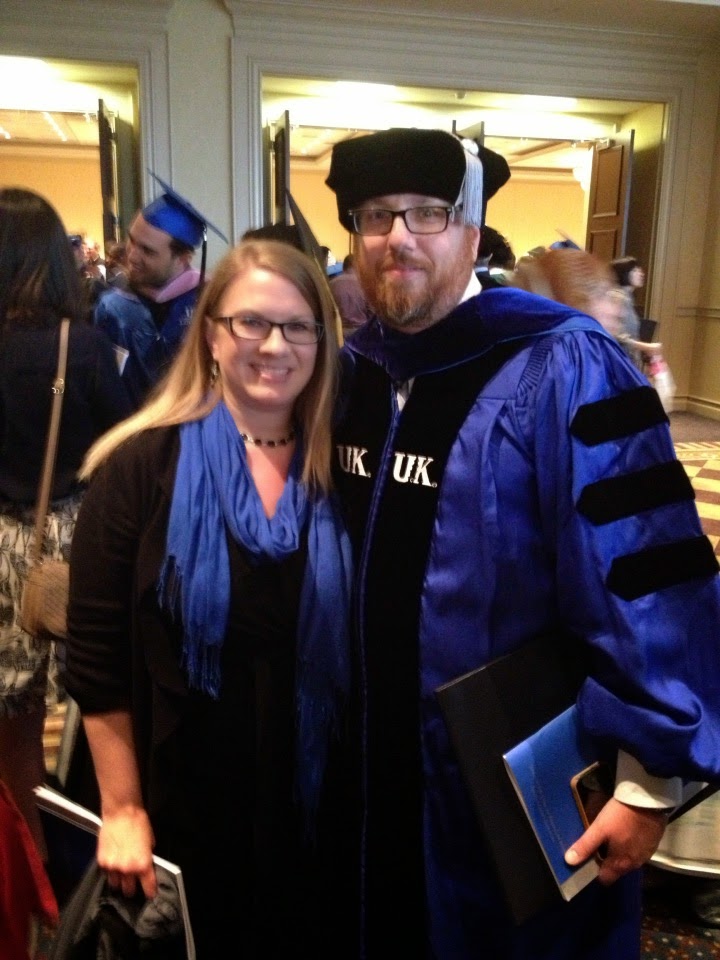

Renee
Since I’ve blogged previously about leaving the classroom and listed lack of time to plan, grade, etc. as one of my reasons for leaving, I’d be curious to know what you remember about the stress I faced was when I was in the classroom, especially with regard to having time and balancing life while trying to be an effective teacher and also being a mom & wife.

Christopher
Yes. I remember your stress very well. And I remember how I thought, “Good grief, it’s not worth it. 70 hours a week for that salary?” And I can’t believe you were able to do it when our boys were toddlers. Wow!  You really are amazing. I also remember wondering if you weren’t giving yourself more work than was necessary. Now, I realize what you were doing as I am doing it myself. To be effective, particularly with the content we teach, it requires daily feedback. And that takes a lot of time (for sure) but also mental strain--and I don’t think anyone has ever really taken that into consideration when they make our schedules and dole out our requirements. To write comments to 100+ individual students requires extreme mental effort. That doesn’t enter into the equation of contracts, and that’s a bona fide problem in education, especially for English teachers.

Renee
Since you are coming from the college setting where instructors typically don't teach all day every day, how are you adjusting to your new schedule of 5 classes back to back in a 7 hour school day five days a week?

Christopher
Teaching is exhausting!  One thing I’ve observed about teaching high school is the amount of concentrated effort it requires. Teaching college classes, I always had a break of at least one day between meeting with those students. That break allowed me time to reflect and rest and get prepared. Teaching high school classes that meet every day means there is no break, so to speak. Further, teaching high school requires one to be “on” pretty much non-stop during the day. From bell to bell, I have to be engaged, obviously. But, what’s different is that there’s virtually no time between classes to gather one’s self and get ready for the next task. I mean to say, from period to period there is five minutes time. But, students start arriving at any moment and I have to engage them and be ready to go as soon as the bell rings. During that five minutes, there are always various questions to answer (like, students who missed the previous day need to know what they missed or a teacher comes to you and asks a favor, etc.). It rarely happened teaching college that I had two classes back to back. And even when I did, there was at least 15 minutes and really, and most importantly, there wasn’t the need to be “on” in the same way. In high school, I’m finding that I have to be “on” in ways that maintain classroom order.  In college, classroom management was basically not an issue.

Time to prepare is really an issue for me teaching high school.  I don’t have it. Because I teach writing and reading, I have to spend physical time and exert considerable mental effort to respond to student work on a daily basis so that the next class can proceed. That has to happen after school, during the time that I also need to be tending to my family, eating dinner, exercising, going to whatever extra curricular activities my children have, and, oh, sleeping. So, it’s really hard to do the job I need to do with the schedule I have. I do have a planning period, but, honestly, that’s 50 minutes spend responding to emails, “sweeping” the halls, managing a student aid, and just catching my breath.

So, I really think that the high school schedule needs to be revised. I think that teachers should be required to teach three classes and expected to use the remainder of the day grading, planning, and doing the necessary research in order to provide quality instruction. The current schedule of teaching 5 classes in a 6 period school day isn’t sustainable. No wonder teachers get burned out and are ineffective. They aren’t given the time to do the job that they need do. Now, what do we do about the teachers who wouldn’t use that time as needed.  Well, I hope you’ll ask me about that because I have tons to say about the profession and what constitutes being a member of the teaching profession. 

“Had we but world enough and time.”  Ah, one day!
 

Saturday, February 22, 2014

Formative Assessment--A Process--Not a Thing

While lurking in the #nctechat about formative assessment last Sunday, my book-a-week reading decision was made for me even as Franki Sibberson was requesting individuals to send her links to any blog posts.  She requested we send her our links by the following Sunday, so I knew I had my work cut out for me since I planned to read Formative Assessment:  Making it Happen in the Classroom and also revisit the NCTE position statement on formative assessment before writing my post.  My journey to this particular book choice began long before the #nctechat, but my determination to write about formative assessment was solidified after reading all the excellent tweets by educators from around the country. 

Eight years ago, school administrators walked into the library where we we having our weekly faculty meeting carrying posters displaying three questions. 


We were told to hang the poster in our classrooms, and then teachers and students in the building where I taught recited these questions regularly. Hanging the poster did not improve my teaching or my students' learning because I had no idea why we were required to post these questions. What I saw and experienced were mandates I assumed were being passed down to help our students perform better on the state standardized test, and I can assure you that I did not, still do not, nor will I ever believe the sole reason to teach anything is for students to perform well on a standardized test.  The first problem with this scenario is that I did not own new practices or embrace these questions.  The second problem with this scenario is that it's a perfect example of poor implementation of great ideas. 

Make the most of a situation--that's what I do, and that's what I did with the above scenerio as well.  Always, I wanted what was best for my students, and I wanted them to think, to learn, to read, to write, to debate, so we accepted the policy and we learned. We learned together, with me learning more about what my students knew and could do and my students learning more of the literacy skills they needed to be successful.

Years after seeing those three questions for the first time, I began working for the state education department and began reading and learning more about formative assessment. As a state we used Classroom Assessment for Student Learning:  Doing It Right, Using It Well.  The questions I had been introduced to years before began making more sense to me as I learned and studied this text and participated in office-wide trainings in preparation for our state content leadership network meetings that would be our statewide system for implementing the Common Core State Standards.  Our office leaders understood the need for new standards to be introduced within a larger context of highly effective teaching and learning and balanced assessment practices.

One of the highlights of the three years I spent working for the state education agency was my assignment as Kentucky's representative to the FAST SCASS.  Our group, led by Margaret Heritage,  convened quarterly in different locations around the country to discuss formative assessment and to learn from one another about how formative assessment (in practice & policy) looked in our respective states.  Working with Heritage was a life-changing opportunity for me professionally because the three questions that were introduced to me all those years before as a teacher made complete sense in a deeper context of learning.

This week I re-read Heritage's book and revisited my many pages of notes from our FAST SCASS meetings.  I also reviewed the NCTE position statement and the Twitter responses by so many teachers who know and understand formative assessment as a process in their classrooms daily.  Resonating with me this week is the stance made by NCTE (and the FAST SCASS).  Formative assessment is not a test or a thing--it is a process.


Effective teaching and learning is clearly the goal for the teachers represented in this book on formative assessment in the classroom. Throughout the book you see specific classroom examples of learning goals and success criteria as well as specific questions teachers ask in various math, science,  and English language arts classrooms.  For example, a sixth grade math teacher "thinks carefully about the questions she uses throughout her lesson both to scaffold learning and elicit evidence (p.60)." Her questions for the start of a lesson, middle of a lesson, and end of a lesson are shared along with her notes for what she's looking for during the lesson so she can make adjustments based on student responses.

Student self-assessment also plays a prominent role in the practices of the teachers represented in the book, and readers even see charts and examples of sheets teachers use to help students assess their progress toward learning goals.

One of my favorite parts of the book though is the chapter on formative feedback for learning.  Here I read more examples, reviewed additional charts, and learned about additional resources on effective feedback that empowers learners.  This chapter emphasizes teachers and students answering three questions--Where am I going, where am I now, where am I going next?