Sunday, July 27, 2014

Learning While Vacationing on Amelia Island

 
Summer Beach on Amelia Island


After a long winter, a full academic year, a job search for my husband, and my many travels for work, our family finally took our much anticipated summer beach vacation.  My father-in-law and his wife rented a beach house for all of us to enjoy time together on Amelia Island in Florida. One of the best things about the place he rented? A screened in private pool. Between midnight swims and afternoon pool games, we certainly enjoyed maximum family time in this pool.
My brother-in-law who flew in from Colorado captured this awesome pic of the pool.


While the beach house included a full kitchen and a grill outside, we did dine out three times during the week. Once because we had just made it to the beach and still needed to shop for groceries, another time because I had a craving for fish tacos, and a third time when we feasted on local seafood at The Crab Trap, a family owned and operated restaurant.
 
My youngest son tried crab legs for the first time.


Florida is one of the nine states in which I have lived in my life, so I'm well aware of the weather there. Though it is the sunshine state and we did have sunshine everyday, there was also a typical rainy afternoon and evening. This allowed plenty of time for reading, watching movies, and playing board games together. My father-in-law's wife, Connie, is a master at Scrabble, and it's rare that anyone can beat her. We all tried though. Monopoly was another favorite, and there was certainly time to enjoy a long game of it.


Thankfully, we didn't see any large and dangerous creatures (sharks or alligators) on this trip, but we did enjoy seeing a graceful praying mantis, a turtle, a few crabs, a couple of  armadillos, and plenty of seagulls. These creatures along with the ocean were all perfect reminders of this amazingly beautiful world in which we live.


Since the house where we stayed included a fully outfitted kitchen, we had no trouble making meals as a family. Something about being away from home made even my son want to help prepare dinner. One night my brother-in-law and husband grilled salmon and made a delicious kale salad for the family to enjoy.


When you have two parents who are educators like my sons do, you know and expect that your family trips will include educational experiences.  While the bulk of our week on Amelia Island was spent swimming in the ocean, collecting unique seashells, lounging by the pool, diving for pool torpedoes, devouring seafood, playing board games on rainy Florida evenings, capturing photos of various live creatures, and chatting with family over grilled feasts, we also made time for an afternoon visit to a Civil War Era fort at Fort Clinch State Park. 
View from the top of the fort


Now we are all rested and relaxed and ready for another academic year!


Saturday, July 26, 2014

A Broken Ankle is Teaching Me a Few Lessons

Skipping down the steps to retrieve socks for my son from the laundry room and thinking not about where I was going and what I was doing, instead thinking about discussions with my husband about how to map out the Common Core Standards to be taught in his eleventh grade English class this fall, I missed a step, turned my right ankle, heard a popping sound, and fell to the ground.  The short, uninteresting tale of my mishap last weekend lead to a series of lessons I've been learning all week.

1) Slow down and cut back on multitasking
I multitask all.the.time. Now, I'm beginning to question the unhealthy practice of multitasking. Too bad it took a broken ankle to wake me up to this reality.  Seriously though, as someone who moves quickly and takes pride in being able to do multiple tasks at once, I need to remember what I've been reading about our brains and multitasking, and I need to slow down. The day of the injury required an immediate slowing down of my pace. After a trip to the E.R., X-rays, a fractured fibula, a visit to the orthopedist and a fiberglass cast, I recognized and began to accept my temporary limited mobility. Depending upon crutches to move from point A to point B demands that I think ahead to what I will need when I get to the next point, and requires me to slow down so I don't topple over while maneuvering on crutches.

2) Understand that it's okay to ask for help
 As a very independent woman, I don't like to ask for help if it's something I am capable of doing myself. Normally, I don't mind asking for help if there's something I don't know how to do, but not being able to do the most basic things for myself has been a humbling learning experience. From bringing me a clean towel and wash cloth for a shower to making my food and bringing me a glass of water, I am now unable to do many regular things for myself, and I'm learning that it's okay to ask for help. Being unable to drive wreaks havoc on a family's schedule, so when friends and family near and far are offering to help, I understand that I need to accept the assistance and feel grateful I'm surrounded by people who care enough to help.

3) Gain perspective by reading others' injury stories
Okay, so this isn't a new realization from this particular injury, but this week I did what I always do when I don't know something, I looked for reading resources on the topic. Fortunately, with access to the Internet and a husband who set me up on the sofa with my computer and ipad, I immediately began reading stories and blogs of others who have suffered this same injury. One blogger even broke her post into a five part series chronicling the entire experience from E.R. visit to recovery and healing. Other blogs provided practical suggestions for showering, scratching inside the cast, and keeping all your essentials near you when you are seated with your leg elevated.

4) Stay positive
 Typically, I'm a very optimistic (glass half-full) sort of person. For the most part I'm managing to keep my spirits up while coping with the hassle of a broken ankle. I realize my situation could be so much worse. I didn't need surgery and I have a family to care for me during my long recovery process. Speaking of a family to care for me--my husband has taken over all cooking and cleaning duties (usually we share these duties). My youngest son brought me breakfast in bed Sunday morning after my first restless night of sleep following the accident. Neither son grumbles when I ask him to bring me things like my phone charger, a glass of water, or my book. My older son suggested I distract myself when there's an itch underneath the cast, and he taught me a new way to climb the stairs in our house. My husband transported me to and from a middle school each day this week since we were hosting a rather large convening of educators from Kentucky, Colorado, California, and Pennsylvania for a week of collaborative lesson design and work on the Common Assignment Study. Colleagues and friends pushed me in a wheel chair at the school, or opened doors and carried my lunch when I was using the crutches. I couldn't have asked for a better support system this past week. As we head into August and eleven more weeks of me being unable to drive, and knowing my husband starts his new job as an English teacher soon, we are considering all our options for transporting our children to and from their back to school camps, practices, and placement tests. While it could be easy to feel down about this situation, I'm choosing to stay positive.

My reminders to self for helping maintain a positive attitude include:

  • Get plenty of rest
  • Eat healthy foods
  • Stretch while laying down
  • Exercise my upper body
  • Move around frequently
  • Be grateful
  • Avoid dwelling on negative aspects of the situation.
Since this blog is about learning and reflecting, I decided it was appropriate to share what I've been learning this week even though it's a very personal and humbling experience.


Friday, July 18, 2014

May and June 2014 Reads

Now that we're half way through July, I'm finally taking time to write about my May and June Reads. I've been traveling for work and pleasure, and reading up a storm but have been taking less time to write. Hopefully, now that I'm home for several weeks I'll get back into my regular writing routine. I'm on a nonfiction reading roll again (if you've been reading my blog for any length of time, you won't be surprised). As I have said many times before, I do enjoy fiction and poetry, but I read more nonfiction than I do fiction.

Though biography/memoir nonfiction encompassed a large chunk of what I've read for the past two months, I've also taken the time to read two more professional books. In May, I read a book by my current boss who enjoys empowering women (something I, too, believe is important).  I read the e-version of Become Your Own Great and Powerful: A Woman's Guide to Living Your Real, Big Life by Barbara Bellissimo.  I especially enjoyed the vignettes in each section of the book because they offered a chance for me to learn about real women encountering real problems and coming up with real solutions in their lives--inspiring!


Five Days at Memorial: Life and Death in a Storm-Ravaged Hospital by Sheri Fink had been on my Goodreads to-read bookshelf for several months, and since it was forever on hold for the paper copy of the book at the public library, I ended up reading an e-book version on my I-pad.  I appreciated the journalistic research and writing and found myself always questioning both sides of the ongoing arguments presented throughout the book. Issues of medical ethics are increasingly interesting to me as I grow older.


Things a Little Bird Told Me:  Confessions of the Creative Mind by Biz Stone was a quick and easy read, and I enjoyed the business tidbits presented, especially since there was a focus on humanity. Fortunately, the public library had a hard back copy of this on the newly released shelf. You can read my entire post on the book (link above) to know more thoughts about this one.

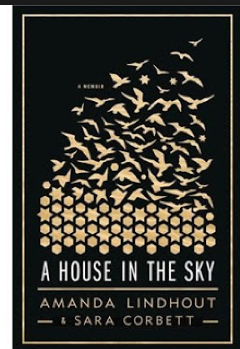
Several months ago I read an article in The New York Times by Amanda Lindhout about her kidnapping and 15 months in captivity in Somalia. Since reading that article, her book had been on my to-read list.  A House in the Sky by Amanda Lindhout and Sara Corbett was heart wrenching, but it also provided hope because of the way Lindout was able to forgive and understand that the people who kidnapped her were just boys who had grown up in a violent country. In some of her darkest hours of captivity when experiencing pain and abuse, she imagined herself in a house in the sky. The hope from the book also comes from knowing Lindhout went on to establish a foundation where she gives back to women and children and regularly advocates for and speaks about social responsibility and women's rights.


My growing and ongoing interest in culture and life in other parts of the world brought me to  My Accidental Jihad:  A Love Story. Krista Bremer's memoir of her marriage to a man from Lybia and her experimentation with Islam was fascinating. Fortunately, our public library had a copy of this book, so I checked it out and read it in a single day while flying out west for work. The fact that the book involved different locations was perfect for my own insatiable need to travel. Starting with Bremer surfing in California, moving to North Carolina, and visiting her husband's home country of Lybia, there are plenty of interesting cultural situations and geographical locales. 


While following stories of nonsensical violence in the news, I was reminded of the Congresswoman from Arizona who was shot in the head at a public event, so I picked up a copy of Gabby: A Story of Courage and Hope by Gabrielle Giffords and Mark Kelly from my local library and read it within a few days. You can read more about my thoughts on this book at the link above.


For years I have enjoyed reading about women (and men) who overcome great feats because of their determination, persistence, and desire to prove to themselves they can accomplish their dreams, so when we were discussing an education summit my workplace will organize in the fall, someone brought up Tori Murden McClure from Louisville, KY. As I researched this woman, I learned that she was the first woman to row solo across the Atlantic Ocean. Even though she failed on her first attempt, she persisted, tried again, and accomplished her goal. The story was inspiring because of the good reminder that we might not accomplish something the first time we try, but we absolutely must try again. We learn through our failures. It took me only a few days to read McClure's book, A Pearl in the Storm: How I Found My Heart in the Middle of the Ocean.


Feeling empowered after reading McClure's book, I decided to re-read the e-version of Trusting Teachers with School Success by Kim Ferris-Berg, Edward J Dirkswager, and Amy Junge. One of my professional goals in life is to be part of opening a teacher-powered school in Kentucky. I've been thinking about it and researching the possibilities for several years now, and most recently, I've met other teachers who are also interested. It's just a matter of time (and a ton of work ahead) now, but I'm ready.


My interest in the ocean and survival stories led me to Adrift: 76 Days Lost at Sea by Steven Callahan which I also read in e-version. Only after I read the book and was telling a colleague about it did I learn that Steven Callahan served as a consultant for The Life of Pi  (a movie I never did see). What I enjoy about books like this are the author/survivor's drive to live and survive under the most dire circumstances with little food and water and with the dangers of the ocean always present.


Goodreads has been a perfect application for me to explore books that interest me, so when Rebecca Solnit's book  The Faraway Nearby popped up as a recommendation for me based on my nonfiction reading interests I immediately checked it out from the library and spent a week reading this series of essays about stories and life. I found myself using post-its to mark passages about empathy, loss, and humanity. After reading the series of essays, I started back at the beginning of the book to read the one entire essay written in ticker fashion at the bottom of each page, and I loved the uniqueness of that essay format.


I'm already well into my July reads, so stay tuned.  Happy reading.

Tuesday, July 08, 2014

Beware of Individualized Instruction

Imagine a six year old child sitting in a cubicle for seven hours a day completing workbooks each day all year. When I see some people celebrate computer programs and students working at their own computers, I worry that some children will end up much like I did as a child. Now, I had many irregularities in my k-12 schooling, including the fact that kindergarten through high school graduation, I moved 22 different times in those 13 years and attended 10 schools, including 3 different schools my fifth grade year.  When I started school, I attended a public kindergarten with a teacher who dressed up like a pumpkin for Halloween. By the end of the school year, my parents decided it wasn't best for me to attend a public school where I could be influenced by secular thoughts. So, they enrolled me in a religious school that used ACE curriculum. Let me tell you what that looked like for the next five critical years of my life.  I sat (as did all the other children) in a cubicle for seven hours a day and completed workbooks (called PACES). We were not allowed to talk or turn around in our seats or we would receive demerits that would require us to miss out on our precious 10 minute breaks from the cubicle that were permitted one time in the morning and one time in the afternoon.  The rules were so strict that my young body had difficulty adjusting biologically and I even experienced a humiliating incident.

Each year we had to work through twelve workbooks (called PACES) for each basic subject.  We read passages, answered questions, and memorized passages or scriptures we had to recite orally to the adult monitors. At the end of each workbook we took a test that determined if we had memorized enough information from the workbook and could move on to the next workbook.  This, for the formidable years of my life, was my primary education.  Then, in the middle of fifth grade my family moved a few times.  The first time I again went to a religious school, but the second time, I went to a public school again for the first time since kindergarten.  Not only was I shocked by the non religious surroundings, I didn't know how to interact in a classroom setting either. My world was officially rocked--big time. I was behind academically because all that memorization of facts did nothing to ensure my understanding of fractions, evolution, or A Wrinkle in Time (all new topics I encountered in 5th grade). For the next five years I attended multiple public schools in several different states.  Then in my tenth grade year, I again attended one of those ACE schools and spent all of my tenth grade year in a cubicle memorizing meaningless facts. Fortunately, by then, I had become more well adjusted socially and I made great friends (one with whom I stay in contact to this day). By eleventh grade we were in another new state, and I was back in public school again where I thrived in career tech/business classes and was an active member of the FBLA.  Academically, however, I wasn't at the top of my game.  Sure, my grades were fine, but I took all basic classes and the easiest math and science courses I could to graduate.  My counselor told me I was a hopeless cause and would never go to college. (Boy, did that make me want to prove him wrong--and, of course, I did). Certainly, all the moves contributed to my mediocre academic performance, but I still believe the so-called individualized instruction I received in my early years put me on a pathway to struggle academically. The individualized workbook approach did not work for me at all.

Flash forward twenty years when I observed at a public school and heard the faculty proclaim with great joy how proud they were of the individualized instruction at their school. I walked in to see students sitting at computers completing online modules for their coursework.  I have to admit I shuddered inside because it took me back to those cubicles of my childhood where I had no learning interaction with classmates or a teacher. The only difference I could see was that they were doing their work using technology instead of paper and pencil. 

Earlier this week, when I read this blog post by Chris Crouch about the direction of learning, it reminded me of my childhood and my recent visit to the school where the faculty proclaimed innovative practice with technology. I became a teacher sixteen years ago so I could contribute to better learning systems than what I experienced, and I persist in the education field now because I want more children to have meaningful learning experiences.  Yes, we need innovation, but we also need authentic learning.


Wednesday, July 02, 2014

Professional Learning Journey


My days have been especially full since my last post, and though I thought often about posting a new blog entry, I have been deep in thought and in work, and haven't taken the time to write.  One of the opportunities I had last week was to participate in a state wide conversation about professional learning in Kentucky.  As preparation for that event, we were asked to prepare a timeline to represent our professional journey.  At the meeting, we shared our timelines, and my friend and colleague shared her creative professional learning timeline.  Not surprisingly, I was impressed and asked Cindy if she would share her timeline in a guest blog post to inspire others.  I know she inspired me, and I hope to re-think my professional journey using a similar format.  If you decide to do the same, I hope you will share.

Enjoy & never stop learning, creating, and leading!

Guest Post by Cindy Parker

“A child said, What is the grass? fetching it to me with full hands;
How could I answer the child...I do not know what it is any
   more than he.

I guess it must be the flag of my disposition, out of hopeful green stuff
   woven.

Or I guess it is the handkerchief of the Lord,
A scented gift and remembrance designedly dropped,
Bearing the owner’s name someway in the corners, that we may see
   And remark, and say Whose?” Walt Whitman, Leaves of Grass

When I started high school, my brother, who is 17 years older than me and a poet, introduced me to Walt Whitman’s poetry.  I remember pondering the strange, wonderful words and form contained in Leaves of Grass.  He has remained one of, if not my favorite poet. So recently, when assigned a task at work to create a professional learning timeline of my journey and experiences with teaching and education, I knew what best represented my journey—Whitman’s words.


I created my timeline using the preface in an old college-student edition purchased at Half-Price Books. My timeline began with my student teaching, then first year of teaching in 1988, both at Harrodsburg High School.  I circled the word “literature” because like all secondary English teachers, I thought that’s what I would be doing as a teacher—teaching the literature I loved. 


Throughout my timeline, I added the names of those who most influenced me as a professional.  In those first years, that was one of my college professors, who served as my university supervisor during student teaching, Jan Isenhour, who would later serve as my instructor in the Bluegrass Writing Project, and who I admired greatly throughout my teaching career.  The second name at the beginning of the timeline is Don Pelly, a biology teacher who served as my KTIP (internship year) mentor.  He was a great mentor, colleague and is still someone I am honored to call a friend, even after we both left HHS in 1998.


A few other highlights from my timeline are colleagues I’ve mentored, such as Monica. I circled “Past and present and future…” because we have continued to work and learn together as friends and colleagues since her first year at Washington County and now at the Kentucky Department of Education.  NBCT appears on my timeline for 2002, the year I achieved National Board Certification, one of the best professional learning experiences I engaged in as a teacher. Renee Boss is among the names recorded along my timeline because of her influence on my growth as a professional, as a colleague whose vision and enthusiasm encourages me, and as someone I love to learn alongside and call a friend.

Something I noticed about my timeline is that the last few years have been packed—with people, with activities, and with new learning.  I circled “progress” and wrote “coherence” as the bringing together of all of this learning. It’s been an exciting time in the last few years to be in education with so many changes.


The final words of the preface sum up this phase of my career, as I enter my 27th year in education and continue to learn, grow, and meet new challenges.  Many find Whitman’s focus on the individual boastful and audacious; I find it refreshing and uplifting and what an educator should strive to be:

“An individual is as superb as a nation when he has the qualities which make a superb nation. The soul of the largest and wealthiest and proudest nation may well go half-way to meet that of its poets.  The signs are effectual. There is no fear of mistake. If the one is true the other is true.  The proof of a poet is that his country absorbs him as affectionately as he has absorbed it.”


Sunday, June 22, 2014

Transforming Teaching and Leading in Kentucky

Kentucky is one of six states and/or districts participating in a new project with the National Board for Professional Teaching Standards.  We are a network of states and districts leading the transformation of the teaching profession by developing and strengthening systems to make board certification the norm and capitalize on the instructional expertise of board-certified teachers.  As a member of Kentucky's #NT3 team, I had the privilege of traveling with our team to Palo Alto, California recently for a week of planning and networking with the teams from the other states and districts.  Our week was filled with long days of intense conversations and planning, but I'm certain it is all worthwhile because I believe in our two aims.

Our meetings were held on Stanford University's campus


The aims of this project are to:
1) increase the number of National Board Certified Teachers (NBCTs)
2) capitalize on instructional leadership of NBCTs

By increasing the number of National Board Certified Teachers, we can make national board certification more the norm rather than a group of a few nationwide.  Over 200 research studies have shown the effectiveness of national board certified teachers in classrooms across the country. NBCTs demonstrate they are highly reflective and capable of teaching at high levels for all students to learn. Since the NBCT process is notoriously difficult to complete (50% pass rate), and it's incredibly expensive on a teacher's salary, the National Board for Professional Teaching Standards organization is revamping the timing of the process and the payment requirements to make the process more accessible to a wider range of teachers.  The 5 Core Propositions will not be changed, and the standards for each content area will not be lowered.  However, now candidates will have more than one year to complete all the required components, and the cost will be more evenly distributed over the three year time period for completing the process.  In addition to these financial and time supports, external organizations will increase the mentoring and support options for candidates pursuing the NB certification process.

After I achieved NB certification, I distinctly remember a time when I asked my principal if I could serve in other leadership capacities and was told no because my expertise was needed in the classroom.  The second aim of the #NT3 is to capitalize on the instructional expertise of NBC teachers so that NBCTs serve in more leadership roles. This particular aim pushes on the need for system leaders to recognize that teachers are an important improvement resource, and it also requires a shared understanding of the strong connection between board certification and instructional leadership roles.  Not all NBCTs have the same exact leadership strengths, so this second aim also strives to match NBCTs and their instructional expertise with the right teacher leadership roles.  For example, some NBCTs are effective with facilitating adult learning, so they work well with their colleagues in professional development settings or in instructional coaching roles. Other NBCTs have more expertise working with the community and parents, so they might serve in roles as community liaisons for a local school or district.  These two roles represent a tiny fraction of the leadership opportunities NBCTs deserve.  You see, all NBCTs (by virtue of completing the NBCT process) have demonstrated their ability as leaders because Entry 4 of the NBCT portfolio requires us to prove our leadership capacity to impact student achievement.

 NBPTS is looking at the medical profession model when seeking to transform the teaching profession and to make board certification more the norm.  Ron Thorpe, CEO and President of NBPTS, talked to us on the last day of our meeting about Paul Starr's book The Social Transformation of American Medicine.  The book is next on my reading list because according to Thorpe, it provides a model from which the teaching profession can learn.  In the nineteenth century, the medical field professionalized itself by changing the social structure of physicians.

I am hopeful with these two aims of  #NT3 that we will transform teaching and leading in education not only in Kentucky but in our entire country. Our students deserve equitable access to board certified teachers who have demonstrated mastery of content knowledge, the ability to design learning experiences that advance learning, the use of assessments to inform instructional decision making, and a commitment to parent, community, and colleague partnerships.

I believe we will see better teacher preparation and support to meet aim one, and that we will  begin seeing more hybrid roles for teachers and more NBCTs leading the education profession to meet aim two. Since Kentucky decided to participate in this important work with the National Board for Professional Teaching Standards, I believe we are demonstrating our state's commitment to advancing the work of committed and effective teachers who desire for all students to learn.

he reflective analyses that they submit must demonstrate:
1) A strong command of content;
2) The ability to design appropriate learning experiences that advance student learning;
3) The use of assessments to inform instructional decision making; and
4) Partnerships with colleagues, parents and the community.
- See more at: http://www.nbpts.org/national-board-certification%C2%AE#sthash.X51VlIpa.dpuf

Sunday, June 15, 2014

What Educators Can Learn From Biz Stone's No Homework Policy

Biz Stone, Twitter Co-Founder, writes about a No-Homework Policy in his recent memoir.  As educators, we can learn from this as we look for ways to re-imagine learning outside of school. By re-thinking our homework policies and approaches in schools we will be better able to meet the needs of today's learners.  As Stone says in his book, "the point of school, after all,  isn't to do homework. The point of school is to learn" (147). To re-think our homework polices requires open and honest discussions about our philosophies and ways of "doing work" in our schools and departments.

Why do we give homework anyway? To provide extra opportunity to practice skills? To ensure students will perform well on standardized tests (shudder)? To progress our instructional agenda at a pace faster than what we have time for in the classroom? To extend learning?  To encourage curiosity and exploration?


If you don't want to read his entire book (even though it's good and a short read) you can read an excerpt from his no-homework policy chapter here
__________

Students (like Biz Stone when he was young) might have a good reason for not completing homework.  In Stone's example, he worked to help support his family, participated in athletics for physical well being, and attempted to complete homework before learning it required him to stay up until 4:00 in the morning.  Eventually, he decided he knew best what he needed and homework wasn't something he really needed, if he could pay attention in class and learn the required content during the school day.

Grades for homework either punish students for non-compliance or they provide an inflated sense of what students know and can do. In Stone's example, he is willing to accept the consequences of non-compliance even when that means earning an A in genetics and a C in something easy. How often does this still happen in our schools? Do we punish students with poor grades based on non-compliance to our made up rules rather than on what they really know? Alternatively, do we give students and their parents a false sense of what students know and can do when we give points for mere homework completion?

Students want teachers and adults to listen to them and to know them and maybe even (Why not?) design assignments that offer choice based on interest. Stone thought "it was a mistake to assume that teachers or anyone else for that matter automatically knew what was best [for him]."

A few weeks ago when I blogged on take-aways from Biz Stone's memoir, I mentioned I would write again about Stone's no-homework policy, and I was encouraged to keep that promise when Elisabeth commented that I had piqued her interest. I hope I've piqued your curiosity as well, and I'd love to know your thoughts about how we can continue re-designing homework practices in our schools. Please comment here or join me in September at the Innovations for Learning Conference in Lexington.  Here's a blurb from my proposal:

In this session we will share, collaborate, and explore tools and websites that will help us turn homework into wonderwork. We will re-imagine the possibilities for extending learning beyond the school day. We will ask--what if?


Tuesday, June 10, 2014

May Love And Peace Prevail

Last night close to midnight I finished reading Gabby: A Story of Courage, Love, and Resilience by Gabrielle Giffords and Mark Kelly. This hope filled book was also a reminder of violent acts against humanity often committed by individuals who don't have hope themselves or who carry so much anger they feel it's necessary to take lives or harm innocent people, including children. You might recall Gabby's story in the news a few years back.  As a young Arizona congresswoman at a congresswoman on your corner event in Tuscon, she was shot in the head, and others around her were killed or injured.  One of those killed was a 9 year old girl with a curiosity and passion for learning about democracy and government.  While reading about the congresswoman's resiliency and survival was difficult and hopeful, reading about the death of Christina Taylor Green was terribly sad.  I found myself asking when these crazy acts of violence will end. It happens all too often.


This morning in Troutdale, Oregon there was another senseless act of gun violence in one of our country's public schools, and last week there was a shooting at Seattle Pacific University. My mind is peppered with so many questions--


Why do we need guns anyway? Ah-I know the reasons many will give, and I suppose if you can be responsible with your weapon, then fine for you, but I'm a no gun kind of woman. In fact, it took a good friend telling me I was too extreme (and it could backfire) before I let my young sons even play with plastic orange toy Nerf guns.

Why do teens have access to guns? Why don't we have stricter gun laws? Why aren't we creating better health systems to help the mentally ill? Why are children being murdered?  How can we feel safe in the schools and universities where we teach and send our children to school? How can we stop the violence? How can we promote more peace and love? 

I'm sad tonight as I think about the family who sent their fourteen year old son to school this morning, a place that should have been safe, yet tonight their son is dead at the hands of a murderer with a gun.  I'm sad when I think about the teacher who was injured by a gun while at work in a school today. I am sad to think this could happen again tomorrow or the next day or the next school year at schools across our country.

Tonight I will hug my sons tighter as I wish them a good night of sleep, and I will feel grateful for life, love, and hope.  

Sunday, June 08, 2014

My Son's Last Year of Elementary School Was His Best Year

My ten-year-old son finished elementary school on Friday, and I can say without a doubt this was his best year ever.  He would agree that it was his best year because he loved his teacher.  She was inspiring and effective. She believed in him, and she helped him hone his natural leadership skills. She had high expectations and considered herself a co-learner in the classroom.

I think it's true that different children bond differently with different teachers, and for Isaac, Mrs. White was a perfect match.  As a parent who has struggled to understand many elementary teachers' points of view and rigid approaches over the years, I will say that this teacher was a good fit for me as well.  I didn't feel like I needed to ask a million questions because she communicated well in advance and was flexible and understanding of parents with busy schedules. For example, she didn't punish my son if I forgot to initial his planner one night, and she gladly sent home an additional field trip permission slip when I inadvertently lost the first one.  More importantly, she also assigned meaningful work (not word search worksheets) and met the individual learning needs of her students. The thing I most appreciated about her though was that she emobdied the traits of a life-long learner and was eager to learn alongside her students.

When I asked Isaac what he liked best about Mrs. White he said that she didn't make him sit still for long periods of time, and she designed active learning opportunities. He also said she was nice and frequently asked him about his interests. Since Isaac has strong interests in history, he always loved it and felt special when he shared his Abraham Lincoln movie and books with her, and she borrowed them to learn more.

Isaac leaves a note for Mrs. White


As we conclude our days as parents of an elementary school aged child, I am mourning the end of young childhood years when my children needed me more. I am grateful to the amazing Mrs. White for helping us end these elementary years on a positive note.

Isaac with his favorite teacher, Mrs. White

The day of 5th grade graduation (technically called a promotion ceremony), we waited behind multiple other students and their parents for students to have their picture made with Mrs. White. She clearly cared for each of her students and made a positive mark on their young lives.


Saturday, May 24, 2014

5 Reasons to Read Things a Little Bird Told Me: Confessions of the Creative Mind

The longer I use Twitter, the more I understand I use it because it connects me to other people, issues, ideas, and humanity.  Because I enjoy using Twitter so much, I previously read Hatching Twitter about the invention of the company.  In that book I learned about the backstabbing and behind the scenes issues the start-up endured on the way to being a successful company.  The one founder who stood out to me most in that book was Biz Stone.  I liked that he was focused on empathy, humanity, and creativity, so he's the one founder I started following on Twitter.  Thus, I learned from a Tweet that he wrote his own memoir on the founding of Twitter.  Biz Stone's Things a Little Bird Told Me:  Confessions of the Creative Mind was an excellent read, a book I recommend for educators, entrepreneurs, or anyone interested in bettering the world.

Things a Little Bird Told Me Reminds Us...

1. Technology without personal connection = pointless
This reminder is apparent in the storyline about how Twitter was originally created.  During a two-week hackathon, Biz Stone and Jack Dorsey worked on a technology that would include status updates from text messages on their phones (pre-iPhone days) to let their friends know how they were doing. The message would appear on a website. They were driven not so much by the technology itself but by the idea of people connecting with one another.

As an educator, I think we should consider this point when we use technology. We could teach the same old boring stuff by placing it in Edmodo or another platform and that would save paper, but what's the point, unless we are in some way connecting people? Instead, How can we use technology platforms to engage students in conversations about ideas, books, community service, etc.?

2. Ideas drive us.  Abandon linear ways of thinking to create good work.
Educators are sometimes known for their linear way of step-by-step thinking and rule following.  Imagine though, the freedom in abandoning those linear ways of thinking and allowing students to abandon step-by-step thinking!  Then we could be learning instead of just completing tasks. We could encourage creative thought and processing. "Plain hard word is good and important, but it is the ideas that drive us as individuals, companies, nations, and a global community.  Creativity is what makes us unique, inspired, and fulfilled (iv)."

3. We learn from failure
In Stone's chapter on the infamous Twitter Fail Whale, he writes about companies liking to put forward the persona of perfection--"we have the best rates! We do the best work! We're awesome! (89)"  We do this in our schools too.  Are we honest about failure and room for improvement? Just as we often celebrate the schools with the best test scores, we also frequently label schools as failing schools, and we don't see that as something positive from which to learn.  How can we be invested in school or education if the primary focus is on obtaining good test scores? We need creativity and authentic learning because everyone is more invested when what we do is about more than a test. “If you are not emotionally invested in what you are doing, failure is pretty much guaranteed...Success isn’t (35)."

4. Some people in the business world DO care about more than the bottom line
So often in the education world we shy away from entrepreneurship and the business world because we think it's only about making money or the bottom line. More and more I'm learning that's true for many businesses, but not for all. My first awareness of this came when I was asked to write an article for a women's business magazine--Cake & Whiskey. C&W's business was created with a manifesto that encourages the telling of stories--connecting women with one another. My belief in the possibility of business being able to do good in the world was then established. Thereafter, it wasn't  a stretch to read Biz Stone write about innovating to improve humanity and finding empathy as a core to personal and global success.

5. We don't have to have a lot of money to give
I related well to Stone's story about being a recipient of free school lunch as a child and appreciated his thoughts on not needing to have a lot of money to give money (or give time). From an early age, my parents taught me this, and I continue to believe it's true and also an important lesson for us to teach kids. Stone's story about giving to DonorsChoose.Org was one of my favorites in the book because he writes about how he and his wife logged on to the site and found a 4th grade teacher who was requesting copies of Charlotte's Web for her class. Knowing young children experienced the friendship of Charlotte and Wilbur for the first time was a personally fulfilling moment for Stone.

Things a Little Bird Told Me:  Confessions of the Creative Mind is well worth taking an afternoon to read.  It's a short 200 pages and will leave you smiling with Stone's witty sense of humor and good natured approach to living life.  

_______

Stay tuned for another post on this book coming soon because Stone had an entire chapter devoted to his no-homework policy--there are lessons for all educators in that chapter.

Saturday, May 17, 2014

How I Learned about Vocab Instruction

When we were in our senior year of college and not yet married,  I recall my husband asking one of our major English professors what he should do to improve his vocabulary in preparation for taking the GRE.  This professor did not suggest a weekly vocabulary quiz or vocabulary flashcards.  No, this professor suggested my husband read even more and read widely.  So, he did.  He began reading both nonfiction and fiction with more fervor.  We married immediately after college graduation and promptly ordered subscriptions to The New Yorker and The Atlantic and took turns reading each issue. Any time I read an article after my husband, I noticed his markings in the text as he carefully read and studied language in preparation for the GRE and graduate course work that would follow.  Clearly, this strategy worked because my husband went on to earn not only a Master's degree but also a PhD in literature.

Much of what we learned from our professors, I took with me to the secondary classroom.  Fortunately, my professors valued critical thinking, close reading, and thoughtful reflection, and those were the exact practices I explicitly taught in my classroom.  I did not require weekly vocabulary lists of words committed to memory, and I did not offer weekly vocabulary tests for students to regurgitate what they had memorized.  My approach to vocabulary instruction was much more subtle and embedded within the texts we read.

After leaving the classroom, I learned more about direct vocabulary instruction and learned that I was probably right not to require dictionary definitions be memorized and recalled each week, but I was wrong not to teach strategies for learning new vocabulary. While the subtle methods of learning vocabulary in context were likely appropriate for my students who were reading on or above grade level, I should not have expected the teenagers who struggled with reading to be as savvy and devoted to learning vocabulary in context as they read without showing them how.

In the three years I worked as a literacy consultant for the state department of education, I learned new vocabulary strategies based on research; these strategies I modeled in professional development settings with teachers who then took them to their classrooms full of students.

Since I never learned many specific strategies for explicitly teaching vocabulary prior to leaving the high school classroom, I can't blame others for not knowing weekly vocabulary lists to memorize and recall on tests is an ineffective way to teach vocabulary. I've learned some schools even have policies requiring teachers to use vocab workbooks with weekly lists.  Still others are creating an entire year's worth of vocabulary lists, one for each week without ever meeting the students or knowing which words students know and don't know.  I've seen these lists on school websites.
An unidentified example of an ineffective approach to vocabulary 

The memorize and recall approach to vocabulary instruction and assessment is disheartening and ineffective for helping students improve their vocabulary for reading, writing, speaking and life.  In fact, Dr. Kimberly Tyson sites this as one of several fake vocabulary practices. Let's not fool ourselves, our students,  and our parents into thinking we are "tough" teachers because we assign "weekly vocab work."  Instead, I believe, together, we can share better strategies and help people who were like me when I was in the classroom (unaware of approaches other than frequent reading and  language study.)

Below are a few of the vocabulary resources I recommend for shaking up the weekly vocab test approach.

__________________

I've written about vocabulary previously, so you know this is a hot button topic for me.

An amazing resource is this blog by Dr. Kimberly Tyson.  Be sure to check out the awesome infographic, too.

Another great blog post titled Doing it Differently:  Tips for Teaching Vocabulary is by Rebecca Alber on Edutopia.

One of my favorite recent finds comes from the Massachusetts Reading Project.  It's titled: Research-based Practices in Vocabulary Instruction:  An Analysis of What Works in Grades PreK-12.

Find a link here to a summary of research articles where you can read the summaries or access the actual research at Reading Rockets.

Adlit.org is a site I learned about when I was working at the state department of education.


How do you teach vocabulary? What strategies can you share?

__________________