Showing posts with label English teachers. Show all posts

Saturday, August 10, 2013

10 for 10: Picture Books an English Teacher Enjoys with Her Sons


This morning while browsing twitter within minutes of waking (according to #twitterrevolution I am not alone in this behavior), I noticed in my feed #pb10for10 and decided to take a look.  Here's what I learned:  Mandy @ Enjoy-EmbraceLearning and Cathy @ Reflect & Refine sponsor a Picture Book 10 for 10 book jog each August.

I couldn't resist.  So here I am on Saturday morning posting my own 10for10 post.  Theme:  10 pictures books an English/Arts & Humanities Teacher enjoys sharing with her sons.  I like these books for a myriad of reasons—for the exposure to authors, music, artists, beautiful words and language, and most importantly because they became not only my favorites, but between my two sons (now ages 10 & 12) these became their favorites as well.

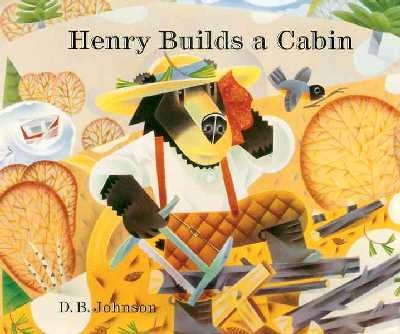
1.   Henry Builds a Cabin  by D. B. Johnson

My English teacher self couldn’t resist sharing this book with my sons.  Thanks to D.B. Johnson, my sons have a full awareness of who Henry David Thoreau is and why I think his work is important.  There is also available--Henry Climbs a Mountain and Henry Hikes to Fitchburg.  We've read them all, but the boys like the dimensions of Thoreau's cabin in this one.


2.  Library Mouse by Daniel Kirk

As library mouse hides away in a school library writing his own books for each genre, this is an excellent tale reminding us that we are all writers.  This is another message I wanted my sons to hear to encourage them to enjoy writing and know that they are capable.  (Right now neither of them prefer writing because most of their writing experiences at school have been spent practicing for the state writing test)


3.  John Coltrane’s Giant Steps remixed by Chris Raschka

Illustrations, words, and style all portray improv—this book is a great way to learn about jazz improvisation.


4.  Slowly, Slowly, Slowly said the Sloth by Eric Carle

From an early age, my oldest child has enjoyed science and nature, and since we enjoyed other Eric Carle books, this one became a delight to us because of the beautiful language and vocabulary.  At the end of the book, the sloth finally replies to the onslaught of attacks from other animals who accuse him of being lazy.  “It is true that I am slow, quiet, and boring.  I am lackadaisical, I dawdle, and I dillydally.  I am also unflappable, languid, stoic, impassive, sluggish, lethargic, placid, calm, mellow…”


5.  Old Cricket by Lisa Wheeler

"Old Cricket woke up feeling, cranky, crotchety, and cantankerous, so when his missus asked him to ready the roof for winter, he came up with a clever plan."  We loved the opening lines as well words the old cricket uses instead of curse words of today.  Plus, it’s a great tale about how the cricket tried many excuses to get out of work but really just needed to dig-in and prepare the roof for winter.


6.  Lego Star Wars The Visual Dictionary

This one became a favorite for my youngest son because of his interest in building and creating with Legos, and his love of all things Star Wars.  I have to admit, it took a while for me to enjoy this book, but after reading it again and again with my son, I couldn’t help myself.  Plus, this book became a great example to me of why we can’t base all our reading decisions for students on Lexile level.  This Lexile level for this book is much higher than my son’s Level, yet he can read the book because it’s a perfect match for him as a reader.


7.  The Cat in the Hat by Dr. Seuss

We definitely have this one memorized and can recite it in its entirety.  Who doesn’t love this one?


8.  Masterpieces Up Close:  Western Painting from the 14th to 20th Centuries

With flip open tabs and close-up shots of sections of each painting, this book became a great one for teaching my boys about masterpieces of Western visual art.


9.  The Giving Tree by Shel Silverstein

What I love about this one?  My ten and twelve year old will still let me read it to them periodically and they love the story.


10.  Hush Little Baby by Sylvia Long

I end with this one because my ten year old still asks me to sing this version of the song to him at night when he goes to sleep.  This natural and beautiful adaptation of the old lullaby has been part of our nighttime routine for twelve years (My oldest is twelve).  Once the boys heard the original version of the song and commented that it was incorrect.  Though my twelve year old no longer asks me to sing him to sleep on a nightly basis, my ten year old is still cool with it and asks me to sing this song to him right before he nods off.  (Sshh:  He would be embarrassed if he knew I’m telling you—if I’ve been out of town for work or if he’s sick—the twelve year old has asked for the song within the last year).


Friday, March 15, 2013

Pi and Togas

The year before I left the classroom, I began making a conscious effort to connect literacy and mathematics because it only made sense.  I had already spent the first decade of my teaching career connecting my English classes to various social studies, arts, and science classes, so mathematics was my new subject to conquer.  Now, just like many other English teachers, this was not initially an easy task for me because I had a terrible fear of math.  Fortunately, our high school had a young and innovative teacher who taught me about mathematical literacies.  This was my foray into connecting my discipline to math.

The next year I left the classroom for a new challenge as a literacy consultant at a state education agency, and my work there led to more mathematics connections because I was asked to serve as the “outside content area” participant on a workgroup for developing Characteristics of HighlyEffective Teaching and Learning for mathematics.  It was during this time I met and worked closely with mathematics consultants who possessed a passion for mathematics the same way I possessed a passion for reading, writing, speaking and listening.  I found it truly inspiring, actually, to see educators committed to ensuring students in our state have the best mathematics experiences they need to be successful.  With one particular consultant, I traveled to numerous national convenings as the work toward developing assessments for the Common Core State Standards began.   We were each the subject matter experts for our state’s participation in the PARCC Consortium.  At the same time, our state was rolling out the standards, so our work was not in isolation; we each had numerous other colleagues for mathematics and English Language Arts.  My work with mathematics experts grew.  The more I surrounded myself with these dedicated educators, the more my fear of thinking about math dissipated.   

Last year I spent pi day with this group and experienced their fondness for the day.  One colleague shared a picture with me via twitter as I celebrated pi day for the first time ever in 2012.  This year on pi day, I facilitated a convening of English department chairs from middle and high schools, so I decided to share the pi day enthusiasm and included the image  on the top of our agenda.   Most told me they, too, had celebrated pi day at their respective schools.

When I awoke this morning and gave pause to consider the Ides of March, I tweeted a message to encourage my mathematics colleagues to celebrate the day.  Ah, they know their history and their literature!  One colleague cleverly replied—"Celebrate—aren’t we supposed to beware the Ides of March?”  She’s obviously read Julius Caesar.  Mathematics and literature aren’t so detached, are they?

Sunday, July 29, 2012

Why I Struggled to Write About My Visit to the Bread Loaf School ofEnglish


Relaxing in an Adirondack chair outside the distinctive yellow buildings at the Bread Loaf School of English, I soaked in the atmosphere of my surroundings while contemplating the excellent blog posts I would write following my visit to Vermont.   I returned home over a week ago and--Nope, nada, nothing.   My weekly blog post didn’t happen.  A number of excuses could be to blame, but ultimately, I just wasn’t satisfied with my attempts to write about my amazing experience.  Since I didn’t want to let the occasion slide without noting it as part of my own learning (to muse) experience, I decided to share pictures and a few anecdotes.


When my invitation to spend three days at the Bread Loaf School of English arrived in my inbox, I immediately grew excited knowing the opportunity would allow me a chance to renew, refresh, and relax.  This is one of those times when I felt proud to represent my state in conversations about teachers and professional learning.  The Bread Loaf Teacher Network arranged for me to stay in Maple during my three day visit.

Since I thrive on conversations, my appointment with the directors was a highlight for me.  Strategizing about how we can create more opportunities for Kentucky teachers to be involved with Bread Loaf was thrilling because I know this means more teachers will have the opportunity to learn from distinguished professors, to hone their own close reading skills, to create digital literacy projects, and to participate in collaborative exchanges with fellow educators from around the nation and around the world.

Knowing my interest in English academics and digital literacies, Kentucky’s coordinator of the Bread Loaf Teacher Network (BLTN) worked with the director of the Bread Loaf School of English and the Director of the Bread Loaf Teacher Network to design an energizing itinerary for me.  We practiced our own close reading skills in a modern British and American poetry class where we discussed poems by Robert Lowell and Geoffrey Hill.  I heard presentations by BLTN teachers during a network meeting--these presentations focused on how youth in English classrooms link literature to current events and public service using the digital literacies they bring to school.


At Bread Loaf there is a literal breaking of bread and connecting with others around meals served by Bread Loaf students in the Bread Loaf dining hall.  My hosts arranged for me to dine the first night with BL faculty and to enjoy other meals with groups of students who are English teachers during the school year.  The conversations were an excellent way for me to learn more about the potential for leveraging the voice of Bread Loaf teachers (who see themselves as agents of change) in our state.


I’m grateful for my three day retreat to the Bread Loaf School of English nestled in the Green Mountains of Vermont.  I feel rejuvenated, relaxed, and reconnected.


Saturday, June 30, 2012

A Day Destined to Create Nurturers of Children and Lovers of Literature

I happen to share my birthday with two other English teacher friends--only one of whom is still in the classroom.  Jana is a former student of mine and now a young and fabulous teacher at a local high school.  The title of today’s blog post comes from Jana in her comment to me on Facebook this morning. Cherry was a colleague and has been a mentor, of sorts, to me as I made a transition, even if it's temporary, out of the classroom.

This birthday morning, I awoke to greetings from family and friends and to read a new blog post at Edweek; this post links to Learning to Muse and has caused a flurry of online dialogue this morning among my colleagues and friends.  The post has also caused me to ask—am I lying to myself to think what I do now in public education matters because I am so passionate about teaching and learning? Is it a lie to tell myself if I still loved teaching I’d stay in the classroom “for the kids?”

A friend from graduate school, now an administrator in Georgia, asked: “I struggle, too…does it get any easier?”  My reply:  “I don’t know if it gets any easier.  In a way I hope not because I don’t ever want to stop loving the classroom, even if I’m not there and especially if I ever return.  My love of teaching inspires what I do daily and the input I provide to the field of public education. Tough, for sure.”

I had a telephone conversation and subsequent online conversation this week with another amazing English teacher who has been teaching for 20 years.  He said to me: “I will simply look at this as a delay…Someday soon!”
 

Another friend, who spent 5 years in the classroom before pursuing other interests, encouraged me by stating “while you may have stepped away from the classroom for a time, you have not left education.  Your work is vital, and its effects are far reaching—across many classrooms.”

Delicate balance.  After reading the Edweek post, another friend and colleague, who spent 27 years in the classroom, commented:  “We absolutely need the best teachers to remain in classrooms teaching our precious children.  But, don’t we also want the best teachers helping negotiate and mediate all of the mandates and dictates that are being imposed on districts/schools/classrooms/teachers/students?

An anonymous educator who retired in May at the top of her game commented on my blog: “The worst thing is for teachers to leave when everyone else knows s/he's ready. What next for me? God knows. But, at least I carry with me the joys and successes no one can take away from me. Leave before everyone wants you to go. Hard to find that kind of high" in the real world. Finding something half as satisfying will be a challenge. What a wonderful journey!”

Life’s great balancing act.  Indeed life is a journey and as I sign off to spend my birthday with my husband and sons, who just made me a delicious brunch, I’m grateful for family, friends, colleagues and others who are working daily to nurture children and create lovers of literature as I continue to do per my 8 year old son who gave me a Dr. Seuss inspired birthday card. 
  

Saturday, May 05, 2012

Literary vs. Informational Text: it's not either/or


An eruption of face to face and online conversations over the past year have centered on the demand for more informational texts to be taught in classrooms across the United States as part of the Common Core State Standards initiative.   As I’ve blogged about previously, I don’t believe this directive requires us to stop teaching literature.  A carefully balanced approach to instruction provides students with opportunities to read a variety of complex and appropriately challenging texts.  We do not have an either (literature) /or (non-fiction) scenario. 
 
Yesterday I was with educators from elementary backgrounds who claimed English teachers need to learn from them because they have been “pairing texts forever since that’s the way basal readers are designed.” (Pretty sure the Dick and Jane series wasn’t designed like this, but surely these educators are referencing the more contemporary design of American textbooks today) No doubt, we all have something to learn from one another, regardless of our teaching level. Nevertheless, creating text parings is not a novel idea; it is something teachers at any grade level have been doing or can start doing with ease.  Text pairings have been part of my teaching approach since I entered the teaching profession in 1998; it just makes sense to design lessons drawing on multiple perspectives, genres, or disciplines. 

Following my day with the educators referenced above, I returned home to find my husband, unexpectedly, cleaning out our garage (where my 8 tubs of teaching materials are stored), so I decided to peruse a few of those tubs and to ponder (again) text pairings I used in my classroom. 


Unifying focus:  Freedom from convention
The Glass Menagerie by Tennessee Williams
Greyed Rainbow by Jackson Pollock
Scholastic Art borrowed class set from art teacher to for class to read article about Pollock.
Colors by Ken Nordine

Unifying focus:  Complexity in life and nature
Starry Night by Vincent Van Gogh
The Starry Night by Anne Sexton
Starry Night by Tupac Shakur
Van Gogh in Auvers from Smithsonian magazine January 2008

Unifying focus:  Identity
The Way to Rainy Mountain by N. Scott Mommaday
Identity card by Mahmoud Darwish
Poems written by students
Various non-fiction writings by students


The skill of pairing texts rests in selecting texts to meet the needs of learners in an individual classroom, so let the text pairings referenced here serve as inspiration for selecting texts that will suit the needs of your students’ demographics and learning needs. 

As you look for more inspiration, consider following the work of Sarah Brown Wessling.  Last spring I participated in NCTE’s virtual conference Supporting Teachers in a Time of Core Standards.  It was here where I met (virtually) 2010 National Teacher of the Year, Sarah Brown Wessling, who talks about fulcrum texts, context, texts, and texture texts.  What an inspiring way to think about text selection!    

Thursday, April 26, 2012

Poem in Your Pocket Day: Ode to a Book II


For the past several weeks I have been asking friends, family, and colleagues what poem they plan to carry for Poem in Your Pocket Day.  While poetry is desirable to me all year long, it’s lovely to have one month a year where we see an extra emphasis on poetry.  Adding to the pleasure is a day of carrying and sharing poems for Poem in Your Pocket Day.

Today I am carrying Ode to the Book II by Pablo Neruda.  I selected this poem because I really love Neruda’s poems, and I’m ruminating on a summer when my husband and I enjoyed reading Neruda’s poems together and drinking fine beverages from Chile.  Since neither of us read Spanish, we were careful to select translations we thought would be reliable and settled on The Essential Neruda:  Selected Poems edited by Mark Eisner.  A City Lights Books publication, the selection includes the poems written in Spanish on one side of the page and in English on the other side.
Our Neruda reading summer bled into the fall when we returned to school, and I found myself sharing Neruda’s poems with my students.  Because a large number of my students were bilingual, I enjoyed listening to them read Neruda’s poems in Spanish and then in English prior to our vibrant text-based class discussions.  This classroom memory obviously stayed with one student because she spent last semester (her senior year of college) in Chile studying through an exchange program at the University of Kentucky.  She posted a picture of Neruda’s home on facebook and considerately tagged me in the post; she actually thought of her former high school English teacher while she was in Chile!

Tomorrow I plan to share poem titles and thoughts on Poem in Your Pocket Day 2012, so if you are reading and carrying a poem today, please tell me, so I can add you to my list of people who shared their pocket poems with me.