Just under a year ago, a few educator colleagues and I had a dream, and it all started with my friend, Sherri, telling us about what we were about to experience as we prepared to attend the national ECET2 conference in California. At this national conference, I met a fellow Kentucky educator whom I had never before met because he was from another part of the state. When we returned home to Kentucky, many of the Kentucky ECET attendees began a twitter campaign and tweeted our hearts out because of Sherri's inspiration before we even attended the conference. Sherri had a dream that we would put on a similar conference here in Kentucky for our teacher friends. Today, that dream became a reality. Even in the midst of a Kentucky snowstorm, teachers braved the elements to come together in Lexington to elevate and celebrate our profession.
Classroom teachers led our day, from our Master of Ceremonies (a high school social studies teacher) to our opening keynote (Sherri) to our breakout sessions (teachers from all subjects and grade levels), to our colleague circle groups (teachers from all grades and subjects) to our lunch keynote speaker (Florida 2010 Teacher of the Year, Megan Allen) to our closing speaker, a 6-12 science teacher from Robertson County, Kentucky.
Sherri encouraged us to get up, team up, and speak up because our profession depends upon it. As
educators in all capacities, we do what we do for the sake of students, and it's important that we not do it in isolation. By collaborating and using our voices, we can make a difference.
Irvin Scott led us in song, and together we began the togetherness Sherri mentioned in her speech. Imagine a room full of teachers singing (to the tune of the Black Eyed Peas song--I've got a feeling) "I've got a feeling that I'm making a difference in kids' lives."
Venturing into colleague circle groups, teachers from around the state gathered in small groups of eight to discuss important issues around education in our state right now.
Break out sessions (led by teachers) included
We sang, we laughed, we grew teary eyed from stories, we shared and collaborated, and we left feeling inspired with our teaching souls nourished.
Classroom teachers led our day, from our Master of Ceremonies (a high school social studies teacher) to our opening keynote (Sherri) to our breakout sessions (teachers from all subjects and grade levels), to our colleague circle groups (teachers from all grades and subjects) to our lunch keynote speaker (Florida 2010 Teacher of the Year, Megan Allen) to our closing speaker, a 6-12 science teacher from Robertson County, Kentucky.
Sherri encouraged us to get up, team up, and speak up because our profession depends upon it. As
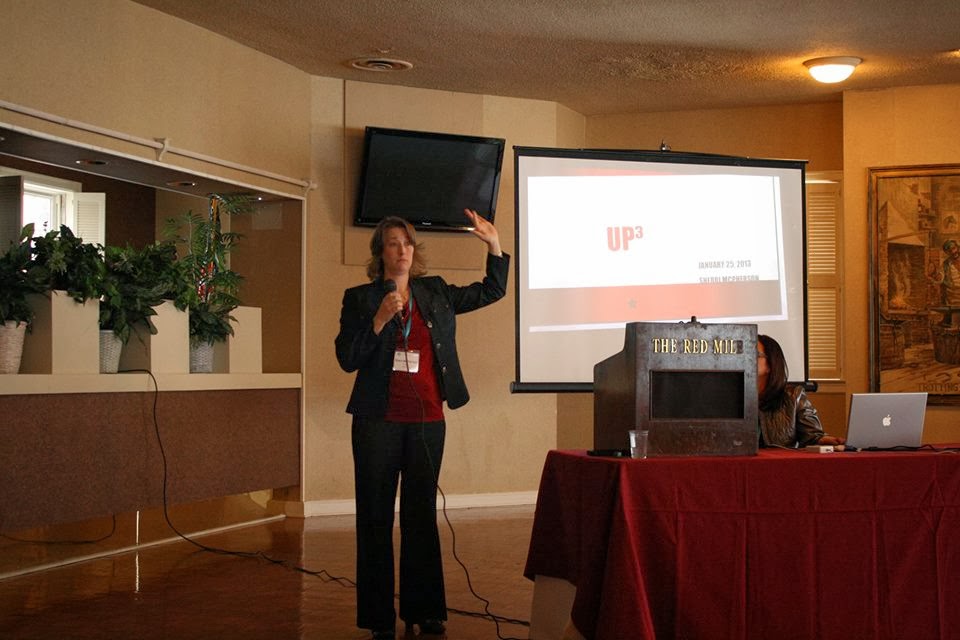 |
| Sherri Presenting. Photo by Amanda Riley |
Irvin Scott led us in song, and together we began the togetherness Sherri mentioned in her speech. Imagine a room full of teachers singing (to the tune of the Black Eyed Peas song--I've got a feeling) "I've got a feeling that I'm making a difference in kids' lives."
Venturing into colleague circle groups, teachers from around the state gathered in small groups of eight to discuss important issues around education in our state right now.
- What obstacles have you as teachers faced in becoming a leader in your school or district?
- What successes have you achieved in teacher leadership recently?
- What can be accomplished in your school, district, and/or state to encourage teacher leadership?
- What steps can you take in order to help more teachers become leaders?
- What and how will you share materials from this conference with those in your school/district?
- What does teacher leadership mean to you?
- What does teacher engagement look like in your classroom/district?
- What are the best mechanisms/social media outlets to continue the discussions/interactions/work of the Colleague Circles?
Break out sessions (led by teachers) included
- Learning and Improving Practice Through Collaboration
- Leveraging your Voice
- Teacher Leadership that Transforms
- Fireside Chat: Personal Journeys in Teacher Leadership
- Your Voice Matters: Reimagining Teacher Preparation
- Google Apps in Education (cancelled due to a new baby being born by the presenter's wife)
We sang, we laughed, we grew teary eyed from stories, we shared and collaborated, and we left feeling inspired with our teaching souls nourished.


