Thursday, October 31, 2013

My Eleventh Hour Connected Educator Blog Post

For the entire month of October, I have had the privilege of publishing a daily blog post at my place of employment.  Each day I posted a profile of a Kentucky educator who's connected; these profiles were sent to me throughout the month and covered educators from a range of roles and regions.  It was a sheer pleasure to read what my colleagues in the state had to say about how they are connected.  In addition to reading and posting all the Kentucky educator profiles, I spent time following educators across the country and world who also wrote connected educator posts.  I even found humor in those who proclaimed connected educator month silly, nonsensical or annoying.

I also spent each day thinking about how I should write my own post about being a connected educator, and each day I put it off to focus on other things in life, including my current personal project and my commitment to practice a more balanced sense of living.

Now as we approach midnight and the end of the month, I decided it would be worth recording a few of my own personal thoughts about ways I'm connected and how it impacts my practice.

I am connected via multiple social media platforms as well as through other networks, some of which meet face-to-face.  I connect because I like to learn and with all the different people in my professional learning network (PLN) I have people from across the world from which to learn via Twitter, Facebook, Blogger, Google +, Linkedin, the NCTE Connected Community, R-Group Space and various Listservs.   I am learning from educators and non-educators alike; I'm learning from other learners who are equally curious about the world in which we live.

Since I moved an untold number of times as a child, teenager, and young adult, I have always enjoyed connecting with others and maintaining some level of contact with those left behind after a move.  For me, technology has made maintaining these connections more feasible.  I have a friend who teaches in France and another who teaches in China, and these connections help me maintain a global perspective--clearly essential in our increasingly connected world.  In addition to these friends, I have met new colleagues who teach in my very state but whom I never met prior to with connecting via Twitter.  I've met new colleagues from other states and even a few new colleagues who teach in other countries.  Though technology might not be the only way to connect, for me technology has impacted my practice by allowing me to connect with a wider and more diverse group of people who all bring different perspectives to an online conversation.  

One of the grumpy connected educator posts I read this month made a distinction between being a teacher and being an educator. This person said those of us who call ourselves educators are really just tyring to sound more important.  Well, for me, that's not the case (meaning, I'm not trying to sound important).  I call myself an educator because I no longer teach on a day-to-day basis in a high school classroom.  In many ways I'm still a teacher though and will never stop being a teacher. 

This semester I taught a pre-service class at the local university and was so happy to be back in a classroom on a regular basis.  Together, my students and I worked on literacy and being connected and prepared to teach adolescents in a digital world.  A favorite connection for us all this term was when the students commented on the blog of Troy Hicks and he commented back to them. They were thrilled because of his willingness to engage in conversation and to continue the learning across state lines.  

In addition to learning with my students, I continued learning by participating in weekly edchats on Twitter, by reading and commenting on various blog posts and by attending face-to-face trainings and summits.  A highlight of connected educator month, actually, was when I had the opportunity to meet face-to-face several of my fellow Kentucky colleagues who participate in the weekly #KyEdChat sessions.  Connectedness via technology is great, but it's even sweeter when a face-to-face connection occurs as well.

Saturday, October 26, 2013

My Teacher Preparation Program Didn't Teach Me Everything

"Are you sure you want to teach there--you should know they haven't had a teacher in months, only subs, and they've been turning over desks and not doing anything all semester."  Such was the comment uttered to me when I accepted my first high school teaching position.  "Absolutely" was my response.  I felt confident and prepared but also aware that I still had a lot to learn.

Teacher preparation has been on my mind for a few months.  Perhaps because a report this summer indicated many programs "have become an industry of mediocrity, churning out first-year teachers with classroom management skills and content knowledge inadequate to thrive in classrooms with ever-increasing ethnic and socioeconomic student diversity."  Perhaps because I taught a pre-service eight week course at the local university and will teach another course in the spring.  Perhaps because my state was one of seven selected for a new pilot program to transform teacher education.

 The teacher preparation program I completed 15 years ago did prepare me to enter the classroom, but it didn't teach me everything, nor could it have.  The most important thing I learned was the value of reflective and thoughtful practice.  Sure I learned theory (mostly constructivism) and pedagogy, but I also learned that I wouldn't know everything.  By situating myself as a life-long learner and accepting my responsibility to have a student centered classroom, I was well on my way to preparing my students to be thinkers and responsible community members who would be ready for life in the present as well as life beyond high school (the term college and career readiness had not yet been coined, even though the ideas behind CCR have been around for decades).

Pre-service teachers have an obligation, too.  It's not just the university or college that's responsible for their preparation.  You get as much out of a program as you're willing to put in, and if you are willing to be persistent, flexible, reflective, and student centered, you are more likely to possess the dispositions necessary in the teaching profession. 

Now don't get me wrong, possessing the dispositions to be an effective teacher is not all that's needed. In addition to teacher dispositions, I also needed to know how to listen to my students, how to have a classroom wherein my students helped create the classroom rules and helped to determine what we would learn, and how to adjust learning based on the individual needs of my students.

No, it (teaching) was never easy but I didn't expect it to be easy.  I expected, however, to be treated as a professional who was willing to learn and grow.   Sadly, that wasn't so much the case when I was in the high school classroom, and often still isn't the case for many teachers in America. 

What about you--did your teacher preparation prepare you to enter the profession? If you are a classroom teacher or were a classroom teacher--are you treated as a professional?

Wednesday, October 16, 2013

Part II: An American Educator's Thoughts on Girl Rising


Today is Blog Action Day, so I thought it would be the perfect day for part 2 of my thoughts on the film, Girl Rising and its campaign to impact girls' education.  If you read part 1, you will remember that I focused on the resources available for an educator to use chapters from the film in a classroom, to better educate youth about global issues.  Part 2 is more personal as I explore the issue of human rights and the goals of the Girl Rising Campaign.


Everyone has the right to education...
Education shall be directed to the full development of the human personality and to the strengthening of respect for human rights and fundamental freedoms...
(excerpts from Article 26 from The Universal Declaration of Human Rights)


"I write songs to remind myself that my memories are real and often because there's so much sadness behind me, what comes out is sad..."  ~Suma

to read my article...check out Cake & Whiskey magazine's fall issue


changing minds + changing lives + changing policies 
= 3 goals of Girl Rising Campaign


Changing Minds


In a telephone interview with Holly Gordon, Executive director/producer, of the Girl Rising campaign, I asked her to differentiate between changing minds and changing lives.  She explained that the first step is to change minds of people across the globe who need to understand the impact educating girls can have on a country’s economic system and development.  Since the Girl Rising film is at the center of the Girl Rising campaign, it’s perfectly situated to change minds through the narrative and stories of the girls seen in the film.

However when running a campaign, stories alone won’t continue to bring in the necessary funds to impact change.  The 10 x10/Girl Rising campaign gauges its impact quarterly with a quantitative look at the donations being provided by the massive audiences the film reaches.  Gordon referenced several partners who help change minds by reaching audiences.  Specifically mentioned was CNN because Gordon believes the film would not have reached as many communities without the national and international viewings from Taiwan to Geneva. “This is important because of the content and message of the film but also CNN is helping amplify the global network (the campaign).”

Not only is the campaign seeing the support of major corporate partners such as Intel (who serves as a strategic partner), it is also seeing support by young people who see the film.   Gordon shared stories of 8th graders in San Francisco creating and playing original theme songs at a recent concert and then donating all of the money earned to the Girl Rising fund for girls’ education.

Gordon and her team like to hear these stories but also understand “events like these happen everywhere—I don’t know about them all and don’t need to know about them all— I’m just glad the events are happening to change minds of young people from an early age so they will know it’s important to be involved in a global world.”  By changing the minds of people about the need to educate girls, lives are also being changed.


Changing Lives

When I asked how they were determining whether the campaign or the film at its center were really changing lives, Gordon began by mentioning that they measure success in part by the return of funds to nonprofit partners.  She talked about “making people aware—getting them to do more.”  But then she naturally moved into more stories of compassion and ingenuity—the very kind of stories that move us in the film.

Gordon told me about a couple, Kevin and Clare Cohen, who founded Pink Bike, a nonprofit that provides girls with bicycles to get to school.  The couple founded the nonprofit organization prior to the completion of the film because they were following the film’s creation virtually—another example of the power of social media and networking to connect people globally. 

She also shared the story of Anastasia, an artist and toymaker who now helps children design wearable wings “to rise.”  Inspired by a New York screening of Girl Rising, this artist empowers youth, especially girls, to use their imaginations and to enjoy creative play.  Gordon said the artist donates proceeds of the toy wings to the Girl Rising campaign.

Changing Policies

The Girl Rising campaign recognizes the importance of getting the film in front of leaders who have power to make change, and one such opportunity arrived in April 2013 at a World Bank event.  Partners from around the world gathered to speak to Ministers of Finance and Education.  When Dr. Jim Kim, President of the World Bank, spoke, he talked about economic development and the need to ensure that every child, regardless of gender, has an opportunity to go to school and to learn.  He referenced recent progress toward the goal of equality but made it clear that Girl Rising “serves as a powerful reminder that far too many children, especially girls, are still unable to go to school.  Too many girls are prevented from making their own choices.  Too many girls are denied the chance to determine their own futures. This must change” (from the World Bank event transcript).

Holly Gordon referenced two other marks toward changing policy—
1) Intel Corporation is hosting policy workshops to impact technology in education and they are also creating gender sensitivity workshops.  2) In India, senior ministers and government officials are working on a gender sensitive framework that will impact hundreds.

According to Gordon,  “We can only make global change if we connect people,” and that’s exactly what the Girl Rising campaign is doing—connecting the dots.   Girl Rising is calling us together to break down the barriers girls across the world face to getting an education.  Are you ready to connect?

________________________

Friday, October 11, 2013

Part I: An American Educator's Thoughts on Girl Rising


This post is the first of three in which I share my thoughts and reflections related to the film, Girl Rising, and the ongoing campaign to educate girls and change the world.


My quest to explore girls' education in developing countries began several months ago when the Editor-in-Chief of the magazine Cake & Whiskey sent me the trailer for the film Girl Rising and asked if I would consider writing an article for the do-gooding column of her magazine's fall issue.  Well, one look at the trailer, and who could resist?


In honor of International Day of the Girl, I used a chapter from the film, Girl Rising, with my students who are pre-service teachers.  In this university class we are always discussing standards and how to teach them.  Not only do we discuss how to teach the standards, we practice teaching the standards.  I model lessons, and the students also create their own lessons which they teach to their classmates.  While I think it's important  these pre-service teachers leave the class with a thorough understanding of standards based instruction and curriculum design, I also think it's important for them to leave inspired and motivated to engage learners in the world.

Suma inspires us.  Wearing a bright orange and yellow sari and a serious look on her face, Suma rides her bicycle along tree lined roads as she takes us on a journey to the various homes where she lived and worked as a bonded servant or Kamlari for much of her young life.  At six years of age, her parents sold her into bonded servitude to ensure she would always have shelter and food.  She lived with different masters and was treated unfairly and even beaten, until a school teacher entered her life at age 11.

Before watching the film chapter, Suma from Nepal, we analyze the vendor-created lesson plans and film viewing guide available on the Girl Rising website. Of course, the vendor says the materials are Common Core aligned, but what we learn is that the materials are loosely correlated to the standards, but they are not aligned to the standards.  In fact all the questions focus on how students feel about what they watch.

For example, consider this question:  How do you feel about Suma’s situation when she was a young girl? Would you define serving as a kamlari to be slavery? do you feel her parents had a choice about whether to sell her as a kamlari? Why or why not?

Now, I certainly believe film and literature can and, perhaps, even should have an impact on how we feel, respond, and take action in our lives, I also believe as educators we are charged with ensuring students have mastered the requisite skills needed to be successful in life (i.e., how to read and cite evidence from text and how to craft logical arguments).  In fact, in the film Girl Rising the girls' stories articulate the importance of learning to read and write to better their lives.

We set the purpose for viewing the film chapter, just as one would in a classroom full of adolescents.  Our purpose is to watch for the impact education had on Suma's life.  Following our viewing of the film chapter, we write for two minutes about our feelings after seeing the intense twelve minute clip.  After expressing our feelings through writing, we respond to our purpose setting question--What impact did education have on Suma's life?  Cite evidence from the text to support your point.

As a class we discuss how to modify the vendor-created viewing guide to make sure it really would be aligned to the standards, but we proceed with caution.  We want to maintain the humanity of the situation and the important issues and at the same time ensure comprehension of the text.

A sample of our class revisions:

Instead of--How do you feel about the social worker's determination?  

Let's use this--How did the social worker's determination impact Suma's life and the life of the girls around Suma?

I was really proud of the students for the modifications they made to the viewing guide. They left the class with smiles on their faces and determination in their steps because they know they will have an impact on adolescents in their classrooms both in America and abroad.  Many of them also recorded the date for our Lexington, KY Girl Rising Screening in their phones because they intend to attend and look for ways they will take action as well.

If you live in the area, please consider joining us on November 6th for the viewing at The Kentucky Theatre.


Part 2 of my thoughts & reflections on Girl Rising will post on October 16th, Blog Action Day.  Part 3 will post after our viewing on November 6th.


Friday, September 27, 2013

Why Are the Reading and Writing Scores So Much Better?

Educators often feel like Atlas, carrying the weight of the world on his shoulders, especially at this time of year when state test scores are being released.  As it is each year at this time, it's my hope that we will remember what's important in our profession.

Walking through the hallway with my principal one afternoon several years ago after our state test scores were released, my principal asked me "Why are the reading and writing scores so much better?  What is your department doing?" 

As an educator who has long been an opponent of the "teach to the test" approach to teaching and learning, I was, honestly, not incredibly happy to hear this question asked of me.  My reply-- "we taught our hearts out."  She probed for more information--"surely you had a technique or strategy that helped the scores be better?" 

Perhaps we did, but that strategy was not test prep! Our department utilized Professional Learning Communities (PLCs) to plan instruction, study student work, and make adjustments to our approach so we could keep teenagers engaged and interested in learning.  We had a system of grade level teams and each team focused on the needs and interests of the students on those teams.  We also had many young and new teachers who kept all of us on our toes and learning new and relevant strategies.  A nice balance of classic and contemporary print and non-print texts were key; we typically paired texts. Text based discussions were integral to helping students write better.  When we taught writing, we focused on real audiences and specific instructional strategies we knew would help our students think more and write better.

We taught the standards and we used the formative assessment process to make adjustments, but we always focused on issues, ideas and humanity in the informational texts, literature, music and film that our students enjoyed.

In Kentucky today, educators, parents, community members, and members of the media are discussing the release of state test scores.  For the second time, students in our state were assessed over the Common Core State Standards for English Language Arts and Mathematics.  It is my deep hope that if administrators ask teachers today what they did to impact test scores (shudder at this question--but know it's a reality), teachers will feel confident in saying "we taught our hearts out."  And that the test prep we all hate so much will not be a stronger focus in schools where the test results are not what people want them to be.  Because, didn't we all get into this profession to impact lives, to have discussions about issues, ideas, the world and humanity?

Monday, September 16, 2013

It's Hard to Learn When You're Hungry

As a person who benefited from free lunch programs at various points during my childhood, and having spent every year of my teaching career in schools with high poverty levels, I feel strongly about the importance of ensuring kids aren't hungry because it's hard to learn when you're hungry.   (NOTE: I never went hungry) 100% of my students on the reservation in North Carolina were offered free lunch and breakfast daily, and 53 % of my students in an urban school in Kentucky qualified for free or reduced lunch.  As a teacher of these varied groups of teenagers, I can remember plenty of times when the granola bars or crackers in my desk drawer were gratefully consumed. 

This past July I had the opportunity to hear Billy Shore speak at a conference in Seattle.  His message was moving because his organization, No Kid Hungry, has data to back its programming, and it's not just a tug on your heart strings approach to gaining donors.

When I learned September is Hunger Action Month, I felt compelled to take action by
educating readers of my blog about childhood hunger, by twEATing, and by eating out at restaurants that are donating money to the No Kid Hungry campaign this month.

Hunger  programs abound to target worldwide hunger and the startling statistics and reality that hunger kills more people per year than AIDS, malaria, and tubercluosis combined.  More than 870 million people in the world do not have enough to eat.
Indeed the statistics in developing countries are worse than those in America, and most certainly they need our attention.  By the same token, we must remember and address the fact that 1 in 6 people in America are hungry.  The documentary A Place at the Table explores and investigates the story of hunger in America.

No Kid Hungry's approach involves connecting kids in need with nutritious food and teaches their families how to cook healthy, affordable meals.  The campaign also engages the public to support public programs that address childhood hunger. 

Parents, educators, and citizens of the Unites States, you can learn more about how to help a school participate in addressing hunger.  Fellow educators can check out this infographic with ideas about how we can help.  


Wednesday, September 11, 2013

Pausing to Remember


 Before beginning my work day today, an email reminder of September 11 appeared in my inbox.  One of my former students (and now a friend) blogs regularly, and since I subscribe to her blog, I was alerted of her new post.   She took some time this morning to remember her 7th grade English class on September 11th, 2001 and she asked her readers what they remember from that day. I wonder if any of my students from that year remember English class that day?  (It was three years after 9/11 before I became Amanda's English teacher.)

A few hours after reading Amanda's post, I received a text message from my husband.

That day I was with my high school English students in Cherokee, North Carolina; we spent the day talking about the unfolding events, trying to understand what was happening.  We contemplated life, death, love, family, and friends.  In the midst of being a teacher and talking with teenagers, I was torn with thoughts of my 7-month old baby boy at home with my husband.  I remember wondering what kind of world he would be growing up in.
Twelve years later I know how fortunate we are for our peaceful life free from daily violence and torment.  I have a lovely life with my husband, 12 year old son, 10 year old son, and dog in Lexington, Kentucky, USA. 

12 y/o son looking at 9/11 remembrance sculpture University of Kentucky Art Museum


Tuesday, September 03, 2013

Pre-service Teachers Share Top 3 Fears & Exciting Thoughts


 Exciting news in my life-- I am teaching again!  This time, it's a course at our local university.  My students are pre-service middle school teachers, and our course is a study of English Language Arts methods.  I invited my class to guest blog today.  Collaboratively, they created this blog post as a practice run for their individual posts they will write each week over the next seven weeks. Their individual posts will not appear here, but we thought a guest post written together for an established blog would be a great start.  Please share your thoughts, comments, and ideas with us.

We the people of EDC 447 have chosen to use this blog as an outlet for sharing our fears and excitement about our upcoming endeavors in the world of teaching. We have spent countless hours in the library studying to become educators, and our time as students is dwindling.  Soon, we will be in classrooms, not sitting in desks, but standing before countless wondering eyes. The last four or five years of our lives have been solely dedicated to earning a piece of paper that will solidify our right to mold the young minds of our students. Without further ado, here is what scares us to death and excites us the most about what lies ahead in our futures.

Top 3 Fears
Students won’t take us seriously. 
We (obviously) started with our fears for teaching.  One of the main fears we have, as young and inexperienced teachers, is that our students won’t take us seriously.  We all know we had teachers that were young and we thought we could get away with so much more simply because they lacked the experience our older teachers had.  As new teachers, we are nervous for how to approach this.  We are eager to learn ways to relate to our students but to also establish the line between students and teacher. 
This is a big responsibility!
It is scary to think that what we teach (or don’t teach) our students will have an impact on their entire lives. We don’t want any of our students to go to class the year after we have them and say, “We never learned that last year.” We don’t want them to get to college or their careers and think, “Why didn’t I learn this in 7th grade?” From where we sit right now, this responsibility seems pretty daunting.
What if we wasted money on teaching degree/will grow to hate teaching?

The cost of a bachelor's degree continues to grow, and nationally 17% of teachers quit every year.  It is only natural then that as teachers-to-be we should fear throwing away all of our money for a temporary infatuation with teaching as a career. If there's anything we learned from Kim Kardsashian's failed marriage, it's that if we're going to spend this much money, it better last.

Top 3 exciting thoughts
Paid job, sense of accomplishment
Throughout our college career, we have developed an appreciation for the full-time, salary-making teacher. As we all worked our way through college, whether it was in retail, food service, or just tutoring students to gain experience with kids, a full-time teaching job is looking like heaven by now. Let’s be honest, we’ve all had to wear a permanent smile on our faces to provide excellent customer service to the public, but that isn’t true self-fulfillment. We are anxiously waiting for the day to step into our very own classroom in hope to make a difference in our students’ lives. Once we fulfill this goal, we will then truly feel a sense of accomplishment and remember why we went to school for four (or five) years to become a teacher.

 Opportunity to collaborate with other teachers
So far in our small teacher education world we have had limited access to school communities.  The longest any of us have spent in one class room is two weeks. While that gave us access to real students, teachers and some parents it was not enough experience to gage what it is like to be a real teacher. Soon we will be students teachers and with this opportunity we will get a deeper experience of collaborating with teachers and getting to know parents and students. As rich as an experience as students teaching while be it is no comparison to being able to say teach at this school, these our my fellow teachers and these a my students.

The power  (and responsibility) is in our hands

For the first time we will get to make the decisions about how our classroom looks and operates.  We are excited about running the classroom the way WE want and getting to develop our identity as teachers for the first time.  It is definitely an exciting responsibility to take everything we have learned over the years and make it our own!

As we come closer to graduation and being hired (fingers crossed) these anxieties and exciting thoughts will only increase.  A little fear never hurt anyone, right?  Until then, we will continue to learn, motivate ourselves, and encourage one another to be the best middle school teachers we can be. Hopefully on that first day, excitement will outweigh fear, and we will rest easy, knowing we can do this.

Friday, August 30, 2013

Complacency Makes Me Cringe

 Complacency has been on my mind this week because of the number of times I have interacted with complacent people or heard mention of it by others, and it makes me cringe. As any English teacher would do,  I looked up the word in the dictionary for more careful consideration of what I would write about it.  Cambridge Dictionaries Online defines complacency as "a feeling of calm satisfaction with your own abilities or situation that prevents you from trying harder."

When I started this post several hours ago, it started as a rant about complacency in the workplace, but as I continued to muse on the topic, I realized I had to discuss the more serious issues of complacency we heard this week at the 50th Anniversary of the March on Washington and the celebration of Martin Luther King, Jr's iconic "I Have a Dream" speech.  (a speech I always enjoyed reading and analyzing with my students)

All across twitter on Wednesday we saw people share their own #Ihaveadream ideas, and many people in education shared dreams of learning opportunities for all, learning opportunities based on more innovative ideas, opportunities to never stop learning.  So, when I also encountered numerous statements indicative of an attidude of complacency, I cringed.

"That innovation stuff just isn't me; I'm more of a traditional gal."
 So, listen, I have nothing against tradition.  In fact, there are many traditions I respect and some for which I feel nostalgic, especially in relation to classic literature, art, and music.  Believe me, I enjoy my share of the classics.  However,  I cringe when I encounter people who refuse to consider a new approach anything--learning, teaching, creating presentations.  I've even heard--"I've been teaching over a decade; I know how to lecture and teach writing" or "I earned a degree in this field years ago, so I know how to plan for a presentation."  As if presentation styles haven't changed in twenty years?  Seriously?

Consider the person who says--"I can't work too hard because I'm a single parent, and my child requires my attention."  To not even try harder is unacceptable to me; it makes the rest of us have to work even harder, and even if we enjoy what we do, it's cringe worthy to be associated (by default) with a lack of effort.  I work in the field of education, so all adults should be modeling for students the diligence, determination, persistence, and hard work we expect of children and teens.

Forever glued in my mind is a statement of a former co-worker who rarely did any work outside work hours.   "I don't have much work to do at home, but I do carry the problems of students home in my heart."  To be sure, complacency or perceived laziness or lack of interest is a downer at work, and it even hinders the organization for which you work.

Nonetheless, there are other even more serious reasons to avoid complacency.  Consider what we heard this week from President Obama at the 50th Anniversary of the March on Washington.  "They did not die in vain, Their victory was great.  But we would dishonor those heroes as well to suggest that the work of this nation is somehow complete.  The arc of the moral universe may bend towards justice, but it doesn't bend on its own.  To secure the gains this country has made requires constant vigilance, not complacency."

at the Martin Luther King, Jr. Memorial April 2013


Indeed, there is much work to be accomplished in this world--in our lifetime.  For the sake of equality for all people, for the sake of children who deserve an opportunity to learn, for the sake of those who have gone before us.  We must not be complacent in efforts to make a difference.

Saturday, August 24, 2013

Seeing The Leader in Me in Action

Last week I was invited to visit with two elementary schools in our district.  Anytime I have the opportunity to visit a school, I think my job is the best.  What was unique about this particular visit was the focus on seeing how "The Leader in Me" schools operate. 

We visited classrooms where students greeted us by standing, holding their arms out wide and announcing "Welcome to Ms. _____'s class.  We are the class of 2024."  What an incredible way to start from their earliest years believing and acting on the fact that all students will graduate from high school.

As a former high school teacher, I can imagine the students I taught over the years who could have benefited from instilling in their heads the idea that they would indeed graduate. Helping them believe and act upon this important fact throughout their K-12 schooling, instead of focusing on trying to survive the last four years of high school would have been a much more positive approach for those who struggled.

We saw The Leader in Me curriculum being taught in several different ways.  In one classroom, the students were echo reading from The Leader in Me student booklets for second grade.  The lesson on the day we visited was about Habit 1--Be Proactive.  Students echo read with the teacher and talked with their partner about their circles of control.  Seeing these young students discuss what they could and could not control in their lives was impressive because it's easy to see how learning the 7 habits can benefit them throughout their entire lives.

As a mom I am always using similar language with my sons when we discuss appropriate attitudes and behavior.  Even though my ten year old's elementary school is not a Leader in Me school, I was impressed when he brought home a note from his teacher to him and she commented on his leadership abilities.  He was so proud of that simple handwritten note--he displayed it in a card stand.  Imagine how much more powerful his leadership abilities might be if his school also utilized The Leader in Me curriculum.

In another classroom, we saw The Leader in Me curriculum embedded within literacy instruction to ensure students were still mastering the Common Core Standards as required in our state. 

In addition to visiting classrooms, we had an opportunity to talk with parents of students in the two schools.  They shared with us their satisfaction with the program, and they talked to us about how they use the same language the students are learning about leadership at school at home as part of the schools' family involvement approach.  It's always great to hear from fellow parents who are not working in schools themselves because sometimes I feel my perspective might be skewed because I work in education.

By far my favorite part of the day was the panel discussion with students.  They shared their leadership notebooks and talked with us about personal and academic goal setting, and they told us what they liked about The Leader in Me.  They also responded very articulately to a series of questions from all the adults in the room.  Their confidence and poise was amazing!  The students see the benefit of what they are learning and the way The Leader in Me is transforming their school and the way adults in their schools interact with them.  A fourth grader shared--"Kids have a lot to offer and until The Leader in Me, people never really cared to ask us."


 Cheers to my two sons on their first day of school 2013-2014 with great hopes that their leardership skills continue to shine.

 Lexington Kentucky USA

First day of 5th grade

First day of 7th grade


Saturday, August 10, 2013

10 for 10: Picture Books an English Teacher Enjoys with Her Sons


This morning while browsing twitter within minutes of waking (according to #twitterrevolution I am not alone in this behavior), I noticed in my feed #pb10for10 and decided to take a look.  Here's what I learned:  Mandy @ Enjoy-EmbraceLearning and Cathy @ Reflect & Refine sponsor a Picture Book 10 for 10 book jog each August.

I couldn't resist.  So here I am on Saturday morning posting my own 10for10 post.  Theme:  10 pictures books an English/Arts & Humanities Teacher enjoys sharing with her sons.  I like these books for a myriad of reasons—for the exposure to authors, music, artists, beautiful words and language, and most importantly because they became not only my favorites, but between my two sons (now ages 10 & 12) these became their favorites as well.

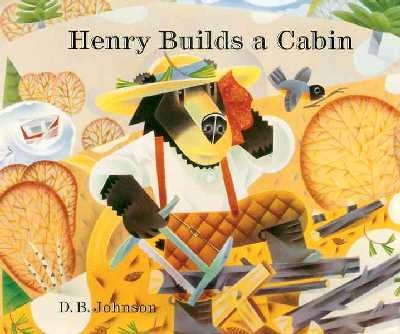
1.   Henry Builds a Cabin  by D. B. Johnson

My English teacher self couldn’t resist sharing this book with my sons.  Thanks to D.B. Johnson, my sons have a full awareness of who Henry David Thoreau is and why I think his work is important.  There is also available--Henry Climbs a Mountain and Henry Hikes to Fitchburg.  We've read them all, but the boys like the dimensions of Thoreau's cabin in this one.


2.  Library Mouse by Daniel Kirk

As library mouse hides away in a school library writing his own books for each genre, this is an excellent tale reminding us that we are all writers.  This is another message I wanted my sons to hear to encourage them to enjoy writing and know that they are capable.  (Right now neither of them prefer writing because most of their writing experiences at school have been spent practicing for the state writing test)


3.  John Coltrane’s Giant Steps remixed by Chris Raschka

Illustrations, words, and style all portray improv—this book is a great way to learn about jazz improvisation.


4.  Slowly, Slowly, Slowly said the Sloth by Eric Carle

From an early age, my oldest child has enjoyed science and nature, and since we enjoyed other Eric Carle books, this one became a delight to us because of the beautiful language and vocabulary.  At the end of the book, the sloth finally replies to the onslaught of attacks from other animals who accuse him of being lazy.  “It is true that I am slow, quiet, and boring.  I am lackadaisical, I dawdle, and I dillydally.  I am also unflappable, languid, stoic, impassive, sluggish, lethargic, placid, calm, mellow…”


5.  Old Cricket by Lisa Wheeler

"Old Cricket woke up feeling, cranky, crotchety, and cantankerous, so when his missus asked him to ready the roof for winter, he came up with a clever plan."  We loved the opening lines as well words the old cricket uses instead of curse words of today.  Plus, it’s a great tale about how the cricket tried many excuses to get out of work but really just needed to dig-in and prepare the roof for winter.


6.  Lego Star Wars The Visual Dictionary

This one became a favorite for my youngest son because of his interest in building and creating with Legos, and his love of all things Star Wars.  I have to admit, it took a while for me to enjoy this book, but after reading it again and again with my son, I couldn’t help myself.  Plus, this book became a great example to me of why we can’t base all our reading decisions for students on Lexile level.  This Lexile level for this book is much higher than my son’s Level, yet he can read the book because it’s a perfect match for him as a reader.


7.  The Cat in the Hat by Dr. Seuss

We definitely have this one memorized and can recite it in its entirety.  Who doesn’t love this one?


8.  Masterpieces Up Close:  Western Painting from the 14th to 20th Centuries

With flip open tabs and close-up shots of sections of each painting, this book became a great one for teaching my boys about masterpieces of Western visual art.


9.  The Giving Tree by Shel Silverstein

What I love about this one?  My ten and twelve year old will still let me read it to them periodically and they love the story.


10.  Hush Little Baby by Sylvia Long

I end with this one because my ten year old still asks me to sing this version of the song to him at night when he goes to sleep.  This natural and beautiful adaptation of the old lullaby has been part of our nighttime routine for twelve years (My oldest is twelve).  Once the boys heard the original version of the song and commented that it was incorrect.  Though my twelve year old no longer asks me to sing him to sleep on a nightly basis, my ten year old is still cool with it and asks me to sing this song to him right before he nods off.  (Sshh:  He would be embarrassed if he knew I’m telling you—if I’ve been out of town for work or if he’s sick—the twelve year old has asked for the song within the last year).


Sunday, August 04, 2013

Six Tips for Facilitating Workgroups

People assume educators know how to facilitate teacher teams or workgroups with other adults, but my experience tells me we all have something to learn about facilitating work with our adult peers.


1)  Listen.  Just like students tell us when we are not reaching them, our adult peers let us know when a workgroup or team is not functioning effectively.  If we listen and respond to the needs of the group, we are more likely to accomplish our goals.  This might mean we have to adjust our own style and approach to meet the needs of the team/work group we are facilitating.  This doesn't mean we are losing track of who we are as an individual, but it does mean we are creating an environment conducive to learning and achieving our common goals.

2)  Set Goals.  We establish objectives and goals in classrooms, right?  We should also establish goals for how teams working together.  The goals should be established as a team and posted with the norms for the group.

3)  Establish Norms.  This one was hard for me to understand when I first started facilitating groups because I'm of the mind that everyone should just be nice and play fair!  Experience has shown me norms help ensure a team functions effectively toward
Mount St. Helen's 2013
achieving the stated goals.  (Sports teams have rules and procedures for a similar reason, right?  And, what about emergency teams who deal with volcanoes erupting?  They have protocols, too.  Side Note:  In 1980 when Mount St. Helen's erupted, protocols and procedures were what ensured rescue workers could save lives)  When groups are learning to work together, some even need to have the norms posted on the wall with protocols for what to do if someone in the group is not adhering to a norm.


4)  Use Protocols.  Speaking of emergency management teams, in education--we could learn from protocols that provide step-by-step approaches to a particular aspect of the work.  For example, teachers have become accustomed to using protocols for examining
student work.  Protocols can also be used for designing units of study or for sharing ideas.  Depending upon a particular group, more formal or less formal protocols might be needed.  It's a good idea to have a few protocols ready when facilitating a group anyway (e.g., a tuning protocol is almost essential).

5)  Reflect.  Educators who facilitate PD or other workgroup events are usually pretty good about distributing evaluations at the end of the day or end of the session, but how often do we debrief and reflect together following those individual reflection minutes?  Reflecting in a debriefing sort of format allows the good, the bad, and the ugly to be addressed immediately with decisions made as a group about how to change the working session for the next time. 

6)  Revise.  Educators are queens and kings of revision.  It's what we do in our quest to ensure learning meets the needs of students.  As a facilitator we must also think about learning from the reflection and debriefing time and revising.  Sometimes we can't wait until the end of a session--(just like we can't always wait until the end of a class period) some situations call for immediate revision.  This will be facilitated more naturally if we are following the first tip on this list--listening.

What do you think?  What am I missing from this list of tips for facilitation?  Do you have any resources to add to my list of favorites below?

Some of my favorite resources on facilitation and/or protocols.

Coalition of Essential Schools.
http://www.essentialschools.org/resources/250

All Things PLC
http://www.allthingsplc.info/


Friday, July 26, 2013

Taking a Leap


I am someone who talks of stepping out of comfort zones to innovate and try new things, but I am also someone who talks this talk but hesitates to take action for fear of failure. Well, I have decided to step out--to take a leap--and to risk failure.

Late this spring I was offered an opportunity to be part of a brand new organization with a mission in which I believe and a hope to transform education in my state.  The risks here are those related to any new organization just beginning, funding and effective leadership. As a non-profit organization, we will be raising funds continually to keep the organization alive and thriving to support the work of innovative teachers and schools in our state.  We will be working with the Board to establish a strategic plan and vision whereby we measure success based on real results.

I could have remained in the local school system where I was enjoying my work with literacy curriculum, instruction, and assessment in secondary schools and where I served as a literacy specialist and resource teacher leader for 12 middle schools, 5 high schools, and numerous programs.  However, had I remained in this position I would have remained in a place of comfort and stability and would not have been walking my talk of the importance of stepping out and taking risks for the sake of creating fresh learning experiences for students. 

My hopes and plans for my new adventure are that 

1) I will learn
2) I will lead
3) I will contribute 

and will do all of the above with the same passion and commitment I have always had for teaching and learning.
Seattle, WA (makes me think adventure)


Sunday, July 21, 2013

Balancing Work and Play

Three states, three conferences, a new job, a Bob Dylan/Wilco concert, and two family birthday celebrations later, I am blogging again and on the topic of balance in life.  One of my least favorite questions to answer is--how do you find the time to do everything you do?  For me, it's about prioritizing, and what's at the top of the priority list fluctuates from day to day or hour to hour, depending upon what's happening in my life at any particular time.  For the past few weeks, blogging was not at the top of my priority list because I decided to spend more time with family and friends in between traveling for work and seeing sites in the beautiful state of Washington with friends.
view of Mount St. Helens from our hike

I just finished a stint where I worked three jobs.  One full-time job for the local public school system, seven months of free-lance writing for a company wanting explanations and instructional strategies for the common core standards, and finally since April, a part-time educational consultancy position for a new non-profit organization.

While most anyone who knows me well will tell you I enjoy working a lot, most will also tell you I adore my family and work hard to provide for them.  Personally,  I also know I would not want to continue working three jobs at the pace I was working.  I was driven by specific goals and the need for balancing work and family play time.  Initially, I accepted the free-lance writing gig to earn money for a family vacation to Washington, D.C.. Knowing I would have an entire week of play with the most important people in my life kept me motivated.  

After that trip, my drive to finish what I started and to fulfill a commitment kept me going. Writing explanations for the standards allowed me to spend more time understanding and revisiting the standards we use in most of the states in the USA when I work with teachers on designing units of study.

The part-time consultancy position?  How could I resist? The organization encapsulates many of the very priorities I appreciate and desire for public education--a focus on transforming education in our state.  As of July1, I am back to one full-time job with this brand new organization. 

In the coming months, you can expect to see me continue blogging because it's important to me, but I also plan to

Hike more...
Exercise more...
Read more..more..more...
Write more...
Volunteer more...
See more live music...
Attend more cross country meets...
Attend more soccer games...

And, of course, I plan to do all these things with the people who matter most to me.