Sunday, February 23, 2014

Why I Read Hatching Twitter

While on a recent trip to San Francisco, my colleague mentioned the Twitter offices to me when we drove through the section of the city where Twitter Headquarters is located, so on my flight home I downloaded Hatching Twitter by Nick Bilton and read the entire 600 e-book pages in a single weekend. Why?

Curiosity.  As an avid Twitter user for my work in education, curiosity about the business world and start-ups caught hold of me, especially since I'm working for a brand new nonprofit aimed at transforming education.  Thinking about how Twitter revolutionized communication and interaction motivates me and feeds my curious nature.  A single day in San Francisco left me wanting to know more about the history of tech start-ups.  What makes the ideas for products and services turn into multi-million or billion dollar companies?   Clearly, not every start-up successfully morphs into a money-making, world-changing company, so what happens to the rest of the start-ups that are less successful or that never make it at all?  Is Twitter an outlier in a sea of failed start-ups?   What made Twitter a success?  If someone starts a business following Twitter's business model, will it be successful? 

Okay, so none of those questions are answered in the book because the book is about relationships, drama, betrayal, power struggles.  Plus, Twitter supposedly lacked a real business plan in its earliest years.

Stories.  A conflict filled book based on real life interviews with individuals involved in the founding of Twitter sucked me right into the story about Ev, Jack, Biz, and Noah.  The book includes sections devoted to each of the founders and his story of rising and falling with Twitter. I enjoyed reading the varying viewpoints of each man's ideas for the purpose of Twitter--from individual status updates to connecting with the world and giving equal voice to people from everywhere/anywhere.

Surprises.  Since I had never previously read anything about the founding of Twitter or about starting a technology company, many surprises came my way while reading Bilton's book.  The power of money and investors was new and surpirisng information for me as were the hiring/firing procedures.  Basically, if the investors/board members decided the leader wasn't directing the company the way they preferred, the CEO would be fired, even if he was one of the comany's founders.

Learning Ev Williams was the founder of my favorite blogging platform, Blogger, was exciting, too, especially since the reason for creating blogger was for "to tell stories.  To disrupt media." Twitter is a tool for disrupting media, starting revolutions, building new businesses and electing government officials.  Twitter is also a tool for creating a network--a professional learning network or PLN.  Personally and professionally I have experienced tremendous growth since learning how to use the tool effectively.

Renewed Learnings.
Relationships matter most.
Stories are powerful and important.
Leaders should respect their employees.
Social media is changing the way we work, interact, communicate, learn, sell, build, and connect.


Saturday, February 22, 2014

Formative Assessment--A Process--Not a Thing

While lurking in the #nctechat about formative assessment last Sunday, my book-a-week reading decision was made for me even as Franki Sibberson was requesting individuals to send her links to any blog posts.  She requested we send her our links by the following Sunday, so I knew I had my work cut out for me since I planned to read Formative Assessment:  Making it Happen in the Classroom and also revisit the NCTE position statement on formative assessment before writing my post.  My journey to this particular book choice began long before the #nctechat, but my determination to write about formative assessment was solidified after reading all the excellent tweets by educators from around the country. 

Eight years ago, school administrators walked into the library where we we having our weekly faculty meeting carrying posters displaying three questions. 


We were told to hang the poster in our classrooms, and then teachers and students in the building where I taught recited these questions regularly. Hanging the poster did not improve my teaching or my students' learning because I had no idea why we were required to post these questions. What I saw and experienced were mandates I assumed were being passed down to help our students perform better on the state standardized test, and I can assure you that I did not, still do not, nor will I ever believe the sole reason to teach anything is for students to perform well on a standardized test.  The first problem with this scenario is that I did not own new practices or embrace these questions.  The second problem with this scenario is that it's a perfect example of poor implementation of great ideas. 

Make the most of a situation--that's what I do, and that's what I did with the above scenerio as well.  Always, I wanted what was best for my students, and I wanted them to think, to learn, to read, to write, to debate, so we accepted the policy and we learned. We learned together, with me learning more about what my students knew and could do and my students learning more of the literacy skills they needed to be successful.

Years after seeing those three questions for the first time, I began working for the state education department and began reading and learning more about formative assessment. As a state we used Classroom Assessment for Student Learning:  Doing It Right, Using It Well.  The questions I had been introduced to years before began making more sense to me as I learned and studied this text and participated in office-wide trainings in preparation for our state content leadership network meetings that would be our statewide system for implementing the Common Core State Standards.  Our office leaders understood the need for new standards to be introduced within a larger context of highly effective teaching and learning and balanced assessment practices.

One of the highlights of the three years I spent working for the state education agency was my assignment as Kentucky's representative to the FAST SCASS.  Our group, led by Margaret Heritage,  convened quarterly in different locations around the country to discuss formative assessment and to learn from one another about how formative assessment (in practice & policy) looked in our respective states.  Working with Heritage was a life-changing opportunity for me professionally because the three questions that were introduced to me all those years before as a teacher made complete sense in a deeper context of learning.

This week I re-read Heritage's book and revisited my many pages of notes from our FAST SCASS meetings.  I also reviewed the NCTE position statement and the Twitter responses by so many teachers who know and understand formative assessment as a process in their classrooms daily.  Resonating with me this week is the stance made by NCTE (and the FAST SCASS).  Formative assessment is not a test or a thing--it is a process.


Effective teaching and learning is clearly the goal for the teachers represented in this book on formative assessment in the classroom. Throughout the book you see specific classroom examples of learning goals and success criteria as well as specific questions teachers ask in various math, science,  and English language arts classrooms.  For example, a sixth grade math teacher "thinks carefully about the questions she uses throughout her lesson both to scaffold learning and elicit evidence (p.60)." Her questions for the start of a lesson, middle of a lesson, and end of a lesson are shared along with her notes for what she's looking for during the lesson so she can make adjustments based on student responses.

Student self-assessment also plays a prominent role in the practices of the teachers represented in the book, and readers even see charts and examples of sheets teachers use to help students assess their progress toward learning goals.

One of my favorite parts of the book though is the chapter on formative feedback for learning.  Here I read more examples, reviewed additional charts, and learned about additional resources on effective feedback that empowers learners.  This chapter emphasizes teachers and students answering three questions--Where am I going, where am I now, where am I going next?

Monday, February 10, 2014

How My Son Taught Me to Appreciate STEM

Lucky me.  13 years ago today I became a mom, and this parenting journey couldn't be any better.  From an early age, my oldest son has had an interest in STEM fields, and through him, I discovered that I have a great appreciation for science, technology, engineering, and math.  From my own perspective, art was already appreciated, and I enjoyed sharing art appreciation with Ethan. Together we appreciate not just STEM but STE(A)M (A--art).

Earlier this year, I read an Atlantic article by Jessica Lahey in which she shares how her dad taught her to appreciate STEAM, especially the design and creativity aspects needed to implement scientific and mathematical concepts.  Since reading this article, I began thinking about what I have learned to appreciate. I realized that I started to appreciate the STEM parts of STEAM about the same time I became a mom.

As a baby, Ethan's interest began with all things in nature...worms, caterpillars, trees, flowers, the ocean, the mountains, the stars.  He taught me to look and to listen when I carried him on my back as we hiked trails in the mountains of North Carolina, and he taught me to stop and observe the
greatness of our universe when he was walking on his own.  As he grew older we moved on to thinking more about how things work and move. We built with Lego blocks, looked through telescopes, rode trains, made energy from fruit, assembled circuit boards, made homemade bubbles and play dough, read books about everything science and tested a variety of energy sources.  Always, art was an essential part of our exploration as well.  We drew, painted, and created things for holiday gifts.

Since learning to count around age two and a half, it was apparent that numbers made sense to him.  Ethan didn't just count, he understood from an early age what numbers mean.  Mathematics became an area of strength for him,  and for some reason, he understands and makes sense of mathematical problems that I don't even contemplate (but I do appreciate!).

Around second grade an increased interest in all things solar powered took hold, and we soldered solar panels together, attended E-day at the University of Kentucky, and worked on a science fair projects for school.  In third grade he researched Thomas Edison and built a cardboard monograph for his biography presentation. Edison was his favorite because of his fascination with electricity, and for Halloween one year he even dressed as Edison, his favorite scientist and inventor.  His fourth grade science fair project investigated solar power versus battery power for toy train lights.

Toward the end of elementary school, a stronger interest in computers and video games developed, and everything Ethan knew about science, design, and art fed directly into his interest in technology.  Like many other children his age, Minecraft is a popular pastime.  With this video game, he's able to use all of his design creativity along with mathematical concepts and technology know-how. His next big plan is to build a computer, and he said this will be a father-son project.  I guess my role as mom and explorer is changing as my son grows and matures.  Even with these changes I will forever be grateful to this boy who has taught me to appreciate all things STEM because this is not an appreciation I expect to lose, only one I expect to continue developing.

Sunday, February 09, 2014

Only a Day and Two Nights in San Francisco

When we were informed our Common Assignment Research Study would be having a meeting for all the partners in San Francisco, I was immediately excited at the possibility of finally seeing City Lights Bookellers in person. I, like many other twenty-one year old students, was inspired by the Beat Generation while I was in college.  Specifically, I remember writing a paper on the San Francisco Renaissance poets (and I had never been to San Francisco).  Jack Kerouac's traveling experiences were alive in my head as I made my travel reservations.

It was a relatively short work meeting, with just one evening dinner meeting (II Fornaio) and then a full day meeting on Friday. I purposefully scheduled the earliest flight I could get out of snowy Lexington on Thursday, even though our dinner wasn't until 6pm PST.  With the time change heading west, I landed in SFO by 10:30 am, and after a short stop at a popular food truck Bacon Bacon on the San Francisco State campus, my colleague (who just moved to Kentucky  from San Francisco) drove me to City Lights and left me to explore while she lunched with friends.  Two glorious hours in this historical bookstore were an English teacher's dream.  I sat upstairs in the poetry room and read for about 30 minutes, and I browsed the vast assortment of poetry collections from every generation, and naturally with a special section dedicated to the Beat Generation.

I also browsed fiction and nonfiction on the other floors of the bookstore, and each time I moved from section to section, I thought about the great authors of an earlier generation who shook up the city and the country with their counterculture movement.  The history of this generation was well represented, not only with their great works of literature, but also with the posters, pictures, and postcards that adorned the walls.

Leaving the bookstore, I walked again by Jack Kerouac Alley before making my way across the Broadway/Columbia inersection to The Beat Museum.  Here I found artifacts and memorabilia like a shirt Kerouac wore, Ginsberg's typewriter and organ and loads of photographs and books from the era.

Since I live on the eastern side of the USA, traveling home Friday night would have required me to take the red eye, and I just wasn't up for that experience.  With only a few free hours on this work trip, my only big goal personally was so see City Lights,  so when I also was able to hear live jazz on Friday night, I felt my San Francisco trip was complete. It was serendipitous because I was stuck at the hotel on my own since others in the group had planned better than I did for a Friday evening out and about  (or they lived locally--our Stanford partners) and went home to their families.  

Determined to make the best of the situation, I went to the hotel restaurant for dinner (Brussels sprouts with bacon crumbles & an Ahi burger). While I was dining, several musicians came in to setup equipment.  I didn't have high hopes for what I would hear, given that I was at a hotel restaurant near the airport.  However, when I asked my waiter what he knew about the music to come, I wasn't disappointed when he told me old school jazz.  Indeed it was old school jazz with three local musicians and all improvisation since they did even know one another before they played together. Three hours of lively jazz music and conversations with locals.  On their break, the musicians talked to me and asked if I had any requests, but they laughed when I asked for Coltrane's Giant Steps or Gillespie's Salt Peanuts. Bebop was clearly not high on their list of usual requests.  Not long later, though, they looked at me and said..."you asked for bebop, so we're going to play some for you," and they played KoKo.

A woman from the San Francisco Bay Area came over to talk to me and to share that she was there at the airport hotel to hear jazz and celebrate her 89th (!) birthday. What a joy she was! The band even played a jazzed up happy birthday in her honor, and she stood up to dance in her sparkly pants and leopard print top.  She was there with her daughters who looked to be my mom's age, and I loved that they brought their mom to hear jazz on her birthday.

All told my day and two nights in San Francisco was the perfect work trip with a splash of personal fun thrown into the mix.  We accomplished our work goals, and I saw City Lights and heard live jazz. Can't get much better than that.


Sunday, February 02, 2014

Why I Support the Common Core

 With continued backlash against the Common Core State Standards, I decided I should take some time to blog about why I support the standards as a parent and as an educator.  I do not support all the scenarios I've seen/heard regarding implementation (and companies trying to make a profit) but for the standards themselves--I support them.  Here's why--

My Point of View as a Parent

1.  My son's writing has improved because he's writing in his content classes (English, science, social studies).  He's not writing fluff either.  He's writing academic essays and research papers, the kind of writing he will do when he goes to college.

2.  My son gets to read the nonfiction texts he enjoys.  Because of the push to include more nonfiction texts, he's reading both fiction and nonfiction now, and that makes sense to me.  He also gets to select what he reads for indepedent reading (he often chooses fiction) because his teachers support effective literacy practices that encourage student choice in reading.  Now some would say that's the opposite of what the CCSS require, but I would argue that it's poor implementation and poor instructional practices that lead people down the path of no student choice in reading.

3.  My son is learning math that will help him as he pursues his interests in STEM fields.  Because he started learning the new math standards in elementary school, by the time he started middle school, he was ready for more intense math courses.  He's learning math now that I didn't learn until my high school years, and it's working for him.  He enjoys it and even gets up early to go to school for extra help if he needs it, and the teacher is there to provide that support.

4.  My son is creating digital projects as called for in the Common Core.

5.  My son is rising to the high expectations set forth in these College and Career Readiness standards.  He's being challenged, and he's learning.  Isn't that the goal of school--learning!?

My Point of View as an Aunt

My nieces and nephews are also rising to the challenges of the Common Core at their schools in North Carolina.  However, because of poor implementation and in some situations poor instructional practices or poor decisions made by the schools and districts, my young nieces and nephews are spending hours each night on homework.  In my sisters' eyes, this is because of the CCSS.  I can't blame them for thinking this, especially since the schools tell them it's because of the standards.  This, to me, screams of poor implementation and poor decisions made by people working with the teachers.  As committed parents, my sisters are pushing through the situation and are willing to consider this distinction between the standards themselves and poor implementation of them.

My Point of View as an Educator

As an educator I support the Common Core State Standards.  I have spent countless hours (hundreds) working with the standards beginning before they were published in their final drafts.  Throughout these hundreds of hours I've worked on understanding, helping others understand, deconstructing, creating lessons and assessment items and teaching the standards.

In these hundreds of hours, I've met middle and high school teachers who like the Common Core, are implementing the standards and are pleased with the results.  A benefit as a teacher is the common language and collaboration across schools, districts, and states.  Too often teaching becomes a place where you feel like you are on an island by yourself.  Because of the common language and learning standards, teachers can now collaborate across state lines and share best practices in teaching.

In my teaching life (teaching pre-service teachers) I have taught the standards as a way to model what my students will teach in their middle and high school classrooms.  The benefit in this situation is that as pre-service teachers, students can practice teaching lessons they might actually use in their classrooms when they are hired as teachers.

My Questions

My biggest questions for those who oppose the Common Core State Standards include
  • How much time have you spent with the standards?  
  • Have you taught any of the standards yourself? 
  • Are you opposed to the standards or how they are being implemented and tested on a large scale?

Thursday, January 30, 2014

January 2014 Reads

Since December doesn't count for my 52 books in 52 weeks reading journey, I'll begin my notations and reflections about the books I read this month.  You can read more about my decision to begin this journey here.

The first book I read in 2014 was 46 Days:  Keeping Up with Jennifer Pharr Davis on the Appalachian Trail by Brew Davis, and really my decision for it being the first book to read came from my impatience in waiting for Called Again to arrive in the mail.  You see, while I was visiting my family in Western North Carolina during Christmas break, I learned about Jennifer Pharr Davis from my sister, Beth (who is also a hiker).  While we were in North Carolina I finished reading Wild and talked to Beth about how much I was enjoyed Strayed's journey of her thru-hike on the Pacific Crest Trail.  Beth grew more interested in the memoir and then told me that she heard of a woman from the Asheville area who had hiked the entire Applachain Trail in 46 days. Naturally, I was intrigued, so Beth and I spent the next hour or so searching the internet for information about this woman who hiked the AT in 46 days.  I found her blog, and since I'm a blogger and hiker, too, I added it to my regular reading list. This month there was even a post by her husband who compared his wife's first book Becoming Odyssa to Cheryl Strayed's Wild.  I encourage you to check it out.

Upon returning home to Lexington, I immediately checked our local Lexington libraries for copies of Called Again, but they were all checked out, and I didn't want to wait, so I used a gift card I received at Christmas to order the book.  Still impatient to read about her story, I looked for an e-version, and that's when I learned about the book written by her husband.  I promptly purchased, downloaded, and proceeded to read 46 days in its entirety in a single evening.  I appreciated the details about the amount of calories she consumed per day, the number of miles she hiked, and the lack of sleep she endured all to accomplish her goal of setting the record for fastest thru-hike of the Appalachian Trail.

When Called AgainA Story of Love and Triumph by Jennifer Pharr Davis arrived in the mail a few days later, I felt already familiar with the story and the details and was able to enjoy the author's writing and reflection of the journey.  I relished in the descriptions of the places along the trail because I have hiked sections of the AT in Georgia and North Carolina.  I read this book in exactly one week.

Knowing I was leaving for a week long work related trip, I decided to grab a longer book to enjoy on the plane and in the evenings at my hotel.  A friend had previously recommended The Aviator's Wife to me, so that was next on my January reading list.  I started reading it the Saturday before leaving on my trip, and honestly, spent the entire day struggling to enjoy it.  I kept talking about it with my husband who reminded me--"you know--it's okay not to like a book!"  I decided to give it a few more chapters before setting it aside in search of something I would enjoy more.  I'm glad I kept with it because by the half way point, it became much more interesting and engaging to me.  I still wouldn't rank it at the top of my personal favorites, but I'm glad I read it, and I did enjoy it by the end because I liked the characters and the time period.  This book took me a week and half, and I finished it right after returning home from my week in Colorado.

Yet another trip was on my calendar, so I checked our bookshelves at home for books I hadn't yet read.  Luckily, my husband is also a reader, so there's always something waiting on the shelves for me.  I pulled Girl Interrupted for my plane ride to Washington D.C..  By the first night I had finished this short (and excellent) memoir by Susanna Kaysen.  Topics of mental health have been intersesting to me since my college days and all my psyhology/counseloing courses.

Obviously, I couldn't be on a trip and out of reading material, so I purused my saved New York Times articles and book reviews for something I might enjoy.  Cheryl Strayed's review of Wave by Sonali Deraniyagala immediately caught my interest, so I decided to give my e-reader another try on this one.  The rich and powerful story of Deraniyagla losing her entire family in the 2004 tsunami was beautifully written, taking me into the author's thoughts and life for the past 9-10 years.  Her sons were just slightly older than mine at the time of their death, and her husband, an academic, only slightly older than mine.  The story was heart wrenching, but I couldn't put it down.  Something inside me needed to know Deraniyagala would work through her grief and that she would share that process in the memoir. 

Monday, January 27, 2014

EQUIP: Educators Evaluating Quality Instructional Products

The Opportunity
 Since leaving the high school classroom a few years ago,  I have worked in jobs where I have been facilitating workgroups and convening people for the creation of collaborative products and/or processes, so when I learned of an opportunity to be part of a workgroup myself, I decided to apply. A few months ago, Achieve's EQuIP initiative placed a national call for reviewers to serve on a panel that would review Common Core aligned lessons and units.  I decided to apply and am certainly glad I spent the time and brain power to do so.  The application process required me to use EQuIP's rubrics to review CCSS lessons and units and provide feedback to the unit developers.  I submitted my review and feedback which was then double-blind scored for effectiveness and accuracy according to previously established norms.  A few weeks later, I received an invitation to sit on the Educators Evaluating Quality Instructional Products Peer Review Panel.


Last week I left the snow and frigid temperatures of Lexington, Kentucky and flew to Washington National Airport where it was actually just slightly warmer than it was when I left Lexington.  I headed to the Westin Arlington Gateway and an evening reception where I met some of the educators from across the country with whom I would work for the next two days.  I met classroom teachers as well as other people like me who support teachers (my day job) and teach teachers (my adjunct gig).

The Process   

Our meeting objectives
  • Norm the use of the EQuIP Rubrics and Quality Review Process 
  • Deepen the ability of peer reviewers to write constructive and criterion-based feedback
  • Calibrate overall ratings among peer reviewers in each content area grade-band cohort
  • Review CCSS aligned instructional materials

We began working toward these objectives early on the first full day, and we engaged in rich and meaningful conversations about the Common Core and constructive feedback.  For those of us familiar with providing this type of feedback to students, the feedback Achieve was seeking for us to provide on the unit reviews made complete sense.  After these conversations, we reviewed a common unit and used the EQuIP rubrics and feedback forms to evaluate the unit and practice providing constructive feedback. 

Prior to attending the meeting we each used the tools and rubrics to evaluate a unit.  When we came together, we then calibrated ourselves with our table groups and the whole group to ensure norming as well as deep understanding of the rubric. This led to robust conversations about how we understand the rubrics.  We practiced again on two additional units; each time the conversations after our individual evaluations were essential to the overall process.

The Achieve team formatively assessed our progress and adjusted the meeting goals as the two days progressed.  By the time we left at the end of the second day, I felt extremely confident in the forthcoming work.  We will work individually to evaluate and provide feedback on units that are sent to us in the coming months, and then we will conference call with a small group to discuss our evaluations and work toward a collective feedback form.  Therefore, anyone receiving feedback on units will know their work has been reviewed using a highly calibrated model by multiple individuals collectively.

The Tools

We used the EQuIP rubrics and learned about training materials available if we wish to use them in our own states, districts, and schools.  The rubrics and the feedback forms are organized around four dimensions.

I.     Alignment to the Depth of the CCSS
II.    Key Shifts in the CCSS
III.   Instructional Supports
IV.   Assessment


The Takeaways

The tools, processes and experiences will be useful to me in my day job leading the Common Assignment Study for Kentucky as well as in my work with future English teachers from our local university.  I see us using these tools to engage in discussion and to make professional judgments about the products we create.

Two intense days of conversation were a good reminder of how teachers I support might feel when they are working collaboratively with other educators from across the country.  We certainly all have Core standards in common as well as an understanding of Key Instructional Shifts that came with the CCSS, but we also all have our own professional judgment and expertise.  I was pleased to hear our Achieve facilitators say "This is not scientific; it requires professional judgment."  I appreciate this statement because I feel it honors teachers as professionals, especially when teachers are the ones developing units or lessons. 


Saturday, January 25, 2014

Elevating and Celebrating Effective Teachers and Teaching in Kentucky

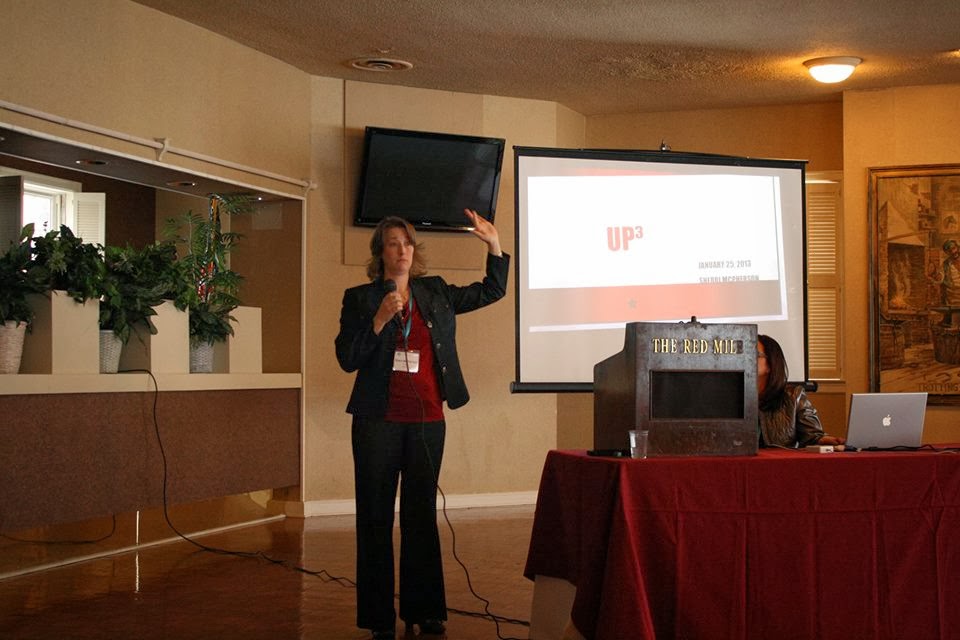
Just under a year ago, a few educator colleagues and I had a dream, and it all started with my friend, Sherri, telling us about what we were about to experience as we prepared to attend the national ECET2 conference in California. At this national conference, I met a fellow Kentucky educator whom I had never before met because he was from another part of the state.  When we returned home to Kentucky, many of the Kentucky ECET attendees began a twitter campaign and tweeted our hearts out because of Sherri's inspiration before we even attended the conference.  Sherri had a dream that we would put on a similar conference here in Kentucky for our teacher friends.  Today, that dream became a reality.  Even in the midst of a Kentucky snowstorm, teachers braved the elements to come together in Lexington to elevate and celebrate our profession.

Classroom teachers led our day, from our Master of Ceremonies (a high school social studies teacher) to our opening keynote (Sherri) to our breakout sessions (teachers from all subjects and grade levels), to our colleague circle groups (teachers from all grades and subjects) to our lunch keynote speaker (Florida 2010 Teacher of the Year, Megan Allen) to our closing speaker, a 6-12 science teacher from Robertson County, Kentucky.

Sherri encouraged us to get up, team up, and speak up because our profession depends upon it.  As
educators in all capacities, we do what we do for the sake of students, and it's important that we not do it in isolation.  By collaborating and using our voices, we can make a difference.
Sherri Presenting.  Photo by Amanda Riley

Irvin Scott led us in song, and together we began the togetherness Sherri mentioned in her speech.  Imagine a room full of teachers singing (to the tune of the Black Eyed Peas song--I've got a feeling) "I've got a feeling that I'm making a difference in kids' lives."

Venturing into colleague circle groups, teachers from around the state gathered in small groups of eight to discuss important issues around education in our state right now.

  • What obstacles have you as teachers faced in becoming a leader in your school or district?
  • What successes have you achieved in teacher leadership recently?
  • What can be accomplished in your school, district, and/or state to encourage teacher leadership?
  • What steps can you take in order to help more teachers become leaders?
  • What and how will you share materials from this conference with those in your school/district?
  • What does teacher leadership mean to you?
  • What does teacher engagement look like in your classroom/district?
  • What are the best mechanisms/social media outlets to continue the discussions/interactions/work of the Colleague Circles?
Not all of these questions were discussed at once, obviously.  In between break out sessions, teachers returned to their colleague circle groups to talk, network, and collaborate on building one another up as a teacher.


Break out sessions (led by teachers) included
  1. Learning and Improving Practice Through Collaboration
  2. Leveraging your Voice
  3. Teacher Leadership that Transforms
  4. Fireside Chat:  Personal Journeys in Teacher Leadership
  5. Your Voice Matters:  Reimagining Teacher Preparation
  6. Google Apps in Education (cancelled due to a new baby being born by the presenter's wife)
At each breakout session we attended we met new colleagues and actively participated in the conversations around each of the presented topics.  These were led by teachers; they were not "sit and get" PD sessions.

We sang, we laughed, we grew teary eyed from stories, we shared and collaborated, and we left feeling inspired with our teaching souls nourished.


Tuesday, January 21, 2014

Kentucky Educators Collaborating with Colorado Educators to Implement Common Core

After an amazing week in Colorado, I can honestly say I'm completely grateful for my job and the opportunities I have to work with educators in Kentucky and across the country.  Each morning last week as I drove to the beautiful Thompson School District Training facility, I drove toward the Rocky Mountains and past a beautiful lake.  The scenery wasn't the only amazing aspect of the week, I worked with excellent educators who all desire the same thing for all students--an equitable opportunity to learn and grow.


This meeting was exceptional because after one face-to-face workshop last summer and a full semester of virtual collaboration on the creation of a unit, teachers were again face-to-face to create new units for the spring semester.  They are creating common units around common content standards, but not scripted step-by step standardized units.  Each teacher contributes to the lessons and makes appropriate adjustments to meet the needs of individual learners in each class.  Teachers are encouraged to think beyond multiple choice tests and toward performance based assessments that will measure deeper learning.   Importantly, teachers lead the unit design and make decisions about the units; their work is facilitated by content experts from Stanford's Center for Assessment Learning and Equity. 

The groups begin by creating Enduring Understandings as learned in our work over the years with Understanding by Design.  These guiding questions serve as a driving force for the the unit of study.  The focus on larger concepts, principles, and ideas keeps us away from a focus on discrete skills alone and helps us consider ideas that will be more engaging to students.  For example, the high school English Language Arts group is looking at the impact of social media on language, and the high school science group is thinking about how humans affect biodiversity. 

Within these larger units of study Literacy Design Collaborative (LDC) modules are embedded.  LDC offers an instructional ladder (with mini tasks developed by teachers) designed to help students attain and surpass the demands of the Common Core literacy standards in each subject area.  Effective implementation is vital with both LDC and larger units for teaching the Common Core State Standards.   That's why our Common Assignment Study is exciting.  We have selected top notch teachers who know how to meet the needs of their students and who are always seeking to grow as learners and professionals.

As a former teacher, I know I would have enjoyed an experience like this, so to be there in a support and leadership capacity, was interesting and invigorating in a new way.  I collaborated as a leader because leaders also have to be willing to work together to create the systems and structures we need in schools, districts, and states to support the work of teachers and the learning of students.


Tuesday, January 07, 2014

Why Must Children be Quiet at School?

Dialogue, debate and excitement in the classroom should obviously be the goals of all educators. “Once I was about to visit a principal,” Ms. Fariña said, “who told me, ‘You’re going to love coming here because you can hear a pin drop.’ I said, ‘I better not come because that isn’t going to make me happy.’ ”    
                                                                 Carmen Fariña as quoted in The New York Times


This quote reminds me of the year my oldest son started kindergarten.  I'll never forget that day seven years ago when I walked him to school for the first day.  I had found someone to teach my first period high school English class, so I could arrive late to the school where I taught after taking my own child to school.  The administrators guided us into the gymnasium where all the students were sitting cross-legged on the floor one behind the next with their backpacks and lunch boxes on their tiny laps.  You could have heard a pin drop in that gymnasium.  They only let parents stay a few minutes before ushering us out.  I couldn't help but ask what would happen next.  The kind lady informed me that the children would sit queitly like this every morning from the time we dropped them off until the time their teacher picked them up and walked them to the classroom (approximately 30 minutes each day since I had to drop him off in time to get to my own school on time on other days).  I asked what they were supposed to do while they were sitting their quietly.  "Can they interact with one another?"
  "No, you can imagine how loud it would get if they were all talking."

Coming from a high school background, I was appalled at the reply.  I cried on my way to school that day, and I probably would have cried anyway since my first born child was going to kindergarten, but
happy & playful boys
I couldn't stop thinking about how these young children were not allowed to engage with one another each morning.  They couldn't play or explore.  They couldn't do anything but sit quietly and wait for school to start each day.

For years I've asked if quietness must be the goal in elementary schools, and I've always felt like I just didn't know better since I come from a secondary background.  Kindergarten teacher, Pernille Ripp who teaches in Wisconsin, has been asking some of these same questions as evidenced in her blog post What Is Our Obsession With Quiet Kids?  Ripp's commentary encapsulates much of my thinking about quietness and nosiness in school.  There's a time and a place for both, but we should certainly let children have conversations with one another.  This week I'm encouraged to know from another highly regarded veteran educator, quietness in a school doesn't have to be our top goal.


Thursday, January 02, 2014

5 Things I've Learned In Two Years of Blogging

On a similar winter day two years ago, I started this blog as a way to reflect and voice my thoughts on
Our backyard in Lexington, KY

education, teaching, and learning.  I selected the title--Learning to Muse--with great thought and consideration about my mission.  My mission is not only to reflect but also to encourage conversation about education re-design, to share thoughts about learning and teaching, and to encourage parents and community members to be involved in public education.

1.  Optimism is essential.   The blogs I most enjoy reading are those that look at life through a positive lens, so I aim to stay as optimistic as possible when I blog too.  An ongoing post I try to write (but haven't been able to complete yet) is about being an idealist who's also an optimist.  Nevertheless, I have written multiple times this past year about dealing with negative people, about looking past complacent people in the workplace, and about staying positive about the work teachers are doing to educate children

2.  Writing takes commitment.  I guess I didn't learn this only through blogging, but the persistence required to maintain a blog has been more readily revealed to me.  I've read many other bloggers who write about the importance of a blogging schedule (I'm still working on that one).  The first year I always made sure to post at least one new blog entry per week.  This year I let a few weeks slip by without posting something new, and I always felt a twinge of guilt because I really wanted to write and had plenty of topics, but neglected to follow through every week.

3.  Collaboration beats isolation.  From teaching ideas to parenting tips, any time I can collaborate my life improves.  Sure, collaboration is messy and sometimes difficult, but the benefits far outweigh working or living in isolation.  This past year I had numerous opportunities to collaborate with colleagues on a number of projects, and I even started a new job focused on collaboration between Kentucky and Colorado educators.  This year also marked a turning point in my social media use and the building of my online professional learning community (PLN).  In 2013 I also had more time with my little family of four, and this made the collaborative parenting approach my husband and I enjoy all the better.

4.  Teaching and leading can happen together.  My post about leaving teaching continues to be one of the most popular posts on this blog.  This year, in particular, I spent a lot of time thinking about teaching and leading and how they can happen together.  I also made my foray back into the classroom, only this time at the university level teaching future teachers (part-time--love it!). 

5.  Lexington is a cool place to live.  This year marked our ten year anniversary of living in Kentucky, USA.  As you will read in this popular post, I was never really excited about moving here.   Becoming involved in my community is what changed my view, and this year a highlight of my involvement was when I served as Movie Captain for Girl Rising and gathered nearly 200 people from Lexington and the surrounding areas together at the historic Kentucky Theatre for a viewing of this important film about girls' education.  Now, I can't imagine leaving Lexington, and I find myself hoping my husband might miraculously find full-time work here.


Sunday, December 29, 2013

Learning through Travel in 2013

I love to travel and think it's very educational because you learn when you pay attention to your surroundings and are curious on each adventure.  I've written previously about how my husband and I try to enhance the fine public school education our children are receiving.   As we near the end of 2013, I've decided to share five little trips our family took this year.  In no way do these trips represent world-wide travel or extensive excursions to exotic places (out of our current budget range).  Instead, I am sharing these small family trips because trips like these are more doable for an average family, and it's a great way to think about how weekend trips to visit family in another state or activities in a local city can also be a learning experience too.  


 Bob Dylan Concert & a Lego Store

For years I've wanted to see Bob Dylan live in concert, and I know my chances are growing slimmer with each passing year, so when we learned Dylan would be in nearby Cincinnati, Ohio, we decided to check on ticket prices.  Fortunately, there was a special for four tickets at a very reasonable rate.  We thought about finding a babysitter for our boys, but then decided we should take them to the concert because seeing Bob Dylan in concert could be a historical moment in their young (10 & 12 years old) lives.  At first they were not thrilled with the idea, but when we told them we would stay overnight in a hotel and go to the Lego store the next day, they were up for the experience.  There was a moment at the concert when my husband took the boys aside and whispered to them to look on the stage and take mental note of Bob Dylan in his white jacket because that would be a moment for them to remember forever.  Afterwards they both said it was pretty cool to see someone with such history, but then they were ready for the visit to the Lego store the next day.


A Civil War Train Ride and Battle Reenactment

Kentucky has its share of Civil War history, so this year we decided to take the boys on a Civil War train ride in Versailles, Kentucky, a short twenty minute drive from where we live.  The experience was fascinating and informative.  Actors and actresses from children to middle-aged adults rode in the train cars with us and carried on in ways that would have been typical of their class status in the 19th century.  We were victims of a Civil War train robbery and it was all in the name of educational fun.


Museums and Monuments Galore in Washington, D.C.

In the early part of the year, I did some freelance writing and consulting to earn money for a desired family trip toWashington, D.C. during spring break.  I had long wanted the family to make this trip because after all the business trips I took to D.C., I knew my family would enjoy seeing the sites and experiencing the history of the city. We found amazing deals on airfare, so the boys took their second ever airplane ride (though they are too young to remember the first one).  We rode the Metro, we walked until our feet were numb, and we rode in a taxi back to the airport.  I highlight modes of transportation because they were one of the highlights for my curious boys who have always enjoyed playing with planes, trains, and automobiles.  Other highlights of the trip were some of the tourist staples--the Smithsonian Museums, the Capitol, Abraham Lincoln's Monument, and Arlington National Cemetery for the changing of the guard.  Coincidentally, the day we watched the changing of the guard was the same day the high school from my husband's home town (Perry, GA) was there laying a wreath at the Tomb of the Unknowns.  


Tybee Island Lighthouse 


Since all of our family live elsewhere, the holidays generally mean a trip of some sort for us.  This year, my husband's dad and step mom (who live in south Georgia) decided to rent a condo on Tybee Island for our Thanksgiving weekend visit. We toured the Tybee Island Lighthouse (and yes--climbed all 178 steps) and we took a historical tour of Savannah too.  My oldest son has been interested in the invention of the light bulb since he was a toddler, so seeing the giant light bulbs they used at one point in the lighthouse's history was especially interesting to him.  The wind was strong the day we visited, so we all stayed close to the building when we walked out on the lookout platform.


The trip would not have been complete without our roadside stop to see and touch the cotton remnants in a field.  My youngest was learning about the plantations in the south and the history of slavery in school, so the cotton field brought very vivid ideas to his mind based on the atrocities he studied in his social studies class.


White Squirrels in the Fall and Christmas in Brevard, North Carolina


My parents and all of my sisters and their families live in North Carolina, and generally we visit in the summer for hiking, picnicking, and seeing waterfalls.  This past summer, however, I started a new job and had numerous work related trips and the boys had various summer camps, so we skipped our summer trip to Brevard.  Instead, we traveled to Brevard during fall break and again during Christmas break.  Being in Brevard in the fall is gorgeous because of the mountain views and fall tree colors.  We even saw a legendary white squirrel on our fall visit.

Our visit at Christmas was momentous because we hadn't seen one of my sisters and her family in over a year since they live in the middle part of the state.  For Christmas though, we were all there with my parents carrying on with family traditions and making memories with cousins playing together in the woods near my parents' house.  

Friday, December 27, 2013

Please Stop the Test Prep in Our Schools

Several weeks ago I began drafting this post after learning from my sisters that their children's schools in North Carolina would start practicing for the state tests.  After talking with teacher and parent friends in Kentucky and around the country and realizing test prep approaches in schools continue to run rampant, I decided it's time to publish this post because this is my way of opening discussion on the issue and my way of encouraging others to do so as well.

Since before launching Learning to Muse in 2012, I have engaged in various conversations with people from around the country about the need to discontinue the test prep approach to teaching.  (Note:  Most of the hundreds of teachers I know do not prefer this approach but feel pressured by the current system to practice for state tests.)  A long time friend and homeschool educator in North Dakota, Gwyn, and I have been dreaming of alternative forms of education and changing the system for some time now.  Only, Gwyn isn't only dreaming--she's making it happen for her own children.  In my quest to persist with public education, I continue to dream that maybe, one day, the landscape will change. 

My own parental heart sank when I once received an email from my son's school (not naming which son or which school for the sake of anonymity here) stating they would begin test prep too.  Specifically, they would be sending home passages for students to read and then answer multiple choice questions "to improve their reading abilities."

As a literacy consultant and former English teacher, I happen to know that requiring students to read passages and answer multiple choice questions is not the way to improve their reading abilities.  As I wrote in a previous post, this is exactly what I feared would happen upon release of the state standardized test scores. The tests themselves are not the problem nor are new standards the problem.  The problem is using a test prep approach for teaching.  Grant Wiggins wrote about this topic last year when people were blaming the tests for all the test prep in schools. 

In the post "Dear High Performing School District," a principal writes to a school district about his dissatisfaction with all the test prep his own children had to endure.  He clearly articulates the same frustration I feel with the focus on subjects that are tested in a specific grade area, or the continuous skill and drill.  Fortunately for his family, they had options to transfer to a different district that focused less on test prep.  Where I live, where my sisters live, and where my friends live that's not an option. Plus, the idealist side of me continues to believe in public education and the potential to transform learning systems in public education to focus on what all kids need, not just what my own kids or relatives need.

Perhaps it's time for me to revisit some of my own advice in a previous post.  As a parent, I will continue to support my own children and their learning opportunities.  I will support the schools and judge them on factors beyond their test scores.  As Brian Nichols mentioned in his letter to a high performing school district, our aim should be "to create problem solvers who find multiple solutions instead of ones that need answer choices."  Insisting that teachers focus on test prep will not help our children become better readers, better thinkers, or better citizens. 
Teachers interpret CCSS for reading-no test prep!

Think about what can happen when educators take action!  The story of Gwyn mentioned above isn't the only story about educators and parents taking action, check out this article about a school in Colorado that's led by the teachers.  They explicitly state "because several of MSLA's founding teacher leaders held National Board certification, the school focused on more robust forms of student learning, not just quick fixes to raise standardized test scores in short order."  They are emphasizing students controlling their own learning and putting the joy back into learning.  These two examples give me hope that maybe--just maybe--all of our children will go to school to learn, not to prepare for tests.

We must persist with creating learning opportunities that promote critical thinking, creativity, collaboration, and problem solving.  Our children deserve it! 

Friday, December 20, 2013

What My Ten Year Old Reminded Me This Christmas

My ten year old brought home from school a handmade Christmas gift for me and my husband.  His
artwork represented his thankfulness--thankful his mom and dad have money.  Inside I was chuckling to myself--"if he only knew."  After all, we've been living primarily on my educator's salary for his entire ten years of life, plus the adjunct instructor pay my husband receives and periodic consulting or writing work I do on the side or random editing jobs Chris picks up when they are available.   If you know anything about adjunct pay, it's not much.  When Chris finished his PhD a few months ago, I was sure our financial situation would change because he would finally have full time work with benefits (I had plenty to learn about how one finds a full time faculty position--whew!). Many people equate a hard earned degree with a job, but things don't always work out that way.  Well, the job market for people with PhDs in English leaves plenty to be desired.   Needless to say, my husband and I have been just short of wallowing in despair this Christmas because of the ongoing job situation for him. 

Leave it to a ten year old to remind us of what we have.  We have money, just enough for what we need, and a full-time job for my husband will come along eventually.  We also have so much more--love, family, friends, a home, food, and education--lots of education.


Graduation Day May 2013
 
“I will honour Christmas in my heart, and try to keep it all the year. I will live in the Past, the Present, and the Future."                                                 
                                                                                                  ~~Dickens