Sunday, August 31, 2014

Sunday Salon: What I Read Onlline August 25-August 31

 Posts from Kentucky that Matter Beyond Kentucky

Because she knows I'm interested in improving as a writer and blogger, my boss shared this woman's website with me. Suzanne Gray lives in Frankfort, Kentucky and writes about creativity and art and has this beautiful website not to be missed.


You may have heard by now, but Kentucky is seeking feedback to make changes to the Common Core State Standards in KY.


This week we celebrated the anniversary of a woman's right to vote. Read this blog  by Heather Watson to learn how women from Kentucky played an important role in passing the 19th amendment.

Jason Linden, a public school teacher in Louisville, writes about homeschooling his daughter because the school system places too much emphasis on test prep. I can relate completely, even though my children still attend public school. If you read my blog, you know how much this issue matters to me!

Lexington teacher, Liz Prather, writes about why it's important to pronounce students' names correctly.

Speaking of Lexington, my city made the list of top cities to live for a quality life.

Health & Well Being

Since I was having my cast removed this week, I was eager to read this article about when I might be able to use my right leg again and drive. When I visited the doctor, he confirmed what I read in this article--12 weeks after the break. Well, I'm 6 weeks down with 6 to go...

Helen Bamber, a therapist to torture victims, died this week. Read about her life here.


Sunday, August 24, 2014

Sunday Salon: What I Read Online August 18-24


Kentucky 

This important blog post from our state commissioner, Dr. Holliday, discusses possible hindrances to innovation in our state because of new USED action that infringes upon our state rights. A topic of huge concern is that the USED now expects Kentucky to test students on old science standards in the spring of 2015. We've been excited about the new Next Generation Science Standards and our students learning science in more innovative ways, and as it stands now, the USED expects Kentucky to assess students on old standards using a ridiculous multiple-choice test.

In Lexington, where I live, one of the middle schools across town created a new mentoring program for incoming sixth graders. Read about it here.

 Since I've long been passionate about pre-service teaching programs and also teach one class at the University of Kentucky, I was interested in reading about this e-mentoring program for teacher candidates offered by a neighboring city's university. 

I am thrilled to be working in education for a non-profit aimed at encouraging and supporting innovative practices in schools. Also exciting is this upcoming education summit our organization is hosting.


Teaching

In "Building Better Teachers" Sara Mosle writes for The Atlantic about teacher time to collaborate--something American schools don't provide. If you've read some of my own posts this week, you will know this is a topic my husband and I are exploring in our new written conversation series.

Since I now have two middle school sons, I was interested in this article by Michelle Icard, because she offers tips for letting middle school students take risks.

For some time now, I've been following the work of Josh Boldt because he writes about the plight of adjuncts, and for so long, that was the world in which our family lived as my husband worked as an adjunct for years before deciding to become a high school English teacher. In this post, Boldt write about why he, too, left the adjunct gig behind.

The Common Core debate continues, and I was excited in this post to see praise for Kentucky's implementation. Indeed, we have many hard working teachers and leaders who have striven for successful implementation with teacher voices leading the way. The post isn't all about Kentucky though, so read for yourself to see how CC is playing out in various places.

Literacy 

The New Yorker writer, Dani Shapiro, shares thoughts about writing memoirs versus sharing Facebook status updates.

I'm contstantly reminded lately of the importance of stories, so I was excited to learn about this new book, Minds Made for Stories, that's been written by Thomas Newkirk

If you're looking for a new book to read or if you want to share book suggestions with your students, check out Malala Yousafzai's suggestions here.

As a woman who's been advocating for education for women and girls around the world, I was excited to learn that Malala Yousafzai's mom is learning to read.


Humanity

For a couple of weeks now, I've been following the story of the killing of Michael Brown, and my heart has ached as a mother and as a teacher. In this post you read about how hard his mom worked to keep him in school. He graduated just weeks before his death and was planning to attend trade school.
Issues of inequality keep me moving as an educator because I can't stand to see students treated differently or offered different schooling options because of their race, ethnicity, or socioeconomic status. In this New York Times article, I saw hope because one of the largest school districts in America is aiming to reduce the arrest rate in their schools.

I can't help but feel for the family of James Foley. This post honors his life.

Just when we're feeling down about many dire situations in our world, we are reminded by Gwyn Ridenhour that there remains hope for the future.

Saturday, August 23, 2014

A World Enough and Time

...and so begins...a written conversation series between husband (PhD and first year high school English teacher) and wife (NBCT English teacher w/11 years in HS classroom and currently trying to impact the profession from outside the classroom)


Renee
Since I’ve blogged previously about leaving the classroom and listed lack of time to plan, grade, etc. as one of my reasons for leaving, I’d be curious to know what you remember about the stress I faced was when I was in the classroom, especially with regard to having time and balancing life while trying to be an effective teacher and also being a mom & wife.

Christopher
Yes. I remember your stress very well. And I remember how I thought, “Good grief, it’s not worth it. 70 hours a week for that salary?” And I can’t believe you were able to do it when our boys were toddlers. Wow!  You really are amazing. I also remember wondering if you weren’t giving yourself more work than was necessary. Now, I realize what you were doing as I am doing it myself. To be effective, particularly with the content we teach, it requires daily feedback. And that takes a lot of time (for sure) but also mental strain--and I don’t think anyone has ever really taken that into consideration when they make our schedules and dole out our requirements. To write comments to 100+ individual students requires extreme mental effort. That doesn’t enter into the equation of contracts, and that’s a bona fide problem in education, especially for English teachers.

Renee
Since you are coming from the college setting where instructors typically don't teach all day every day, how are you adjusting to your new schedule of 5 classes back to back in a 7 hour school day five days a week?

Christopher
Teaching is exhausting!  One thing I’ve observed about teaching high school is the amount of concentrated effort it requires. Teaching college classes, I always had a break of at least one day between meeting with those students. That break allowed me time to reflect and rest and get prepared. Teaching high school classes that meet every day means there is no break, so to speak. Further, teaching high school requires one to be “on” pretty much non-stop during the day. From bell to bell, I have to be engaged, obviously. But, what’s different is that there’s virtually no time between classes to gather one’s self and get ready for the next task. I mean to say, from period to period there is five minutes time. But, students start arriving at any moment and I have to engage them and be ready to go as soon as the bell rings. During that five minutes, there are always various questions to answer (like, students who missed the previous day need to know what they missed or a teacher comes to you and asks a favor, etc.). It rarely happened teaching college that I had two classes back to back. And even when I did, there was at least 15 minutes and really, and most importantly, there wasn’t the need to be “on” in the same way. In high school, I’m finding that I have to be “on” in ways that maintain classroom order.  In college, classroom management was basically not an issue.

Time to prepare is really an issue for me teaching high school.  I don’t have it. Because I teach writing and reading, I have to spend physical time and exert considerable mental effort to respond to student work on a daily basis so that the next class can proceed. That has to happen after school, during the time that I also need to be tending to my family, eating dinner, exercising, going to whatever extra curricular activities my children have, and, oh, sleeping. So, it’s really hard to do the job I need to do with the schedule I have. I do have a planning period, but, honestly, that’s 50 minutes spend responding to emails, “sweeping” the halls, managing a student aid, and just catching my breath.

So, I really think that the high school schedule needs to be revised. I think that teachers should be required to teach three classes and expected to use the remainder of the day grading, planning, and doing the necessary research in order to provide quality instruction. The current schedule of teaching 5 classes in a 6 period school day isn’t sustainable. No wonder teachers get burned out and are ineffective. They aren’t given the time to do the job that they need do. Now, what do we do about the teachers who wouldn’t use that time as needed.  Well, I hope you’ll ask me about that because I have tons to say about the profession and what constitutes being a member of the teaching profession. 

“Had we but world enough and time.”  Ah, one day!
 

Friday, August 22, 2014

Intro to a Written Conversation Series on Teaching and Elevating the Profession

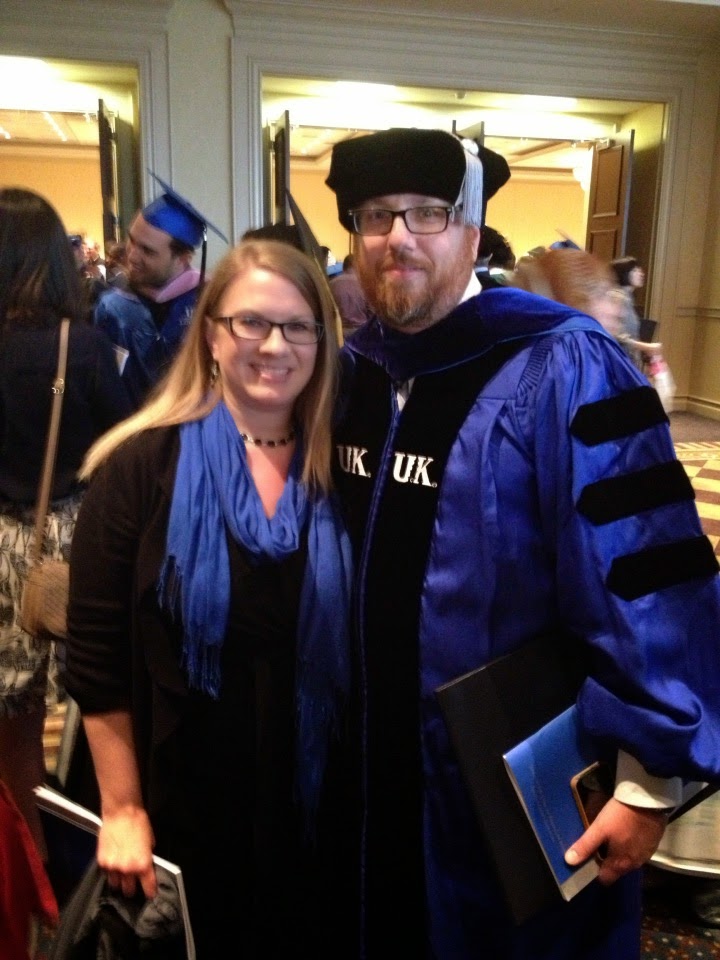
A year and a half ago I wrote about how our original sole purpose for moving to Kentucky was complete when my husband finished his English doctoral program at the University of Kentucky. Since then, I've blogged about his graduation, search for a job, and our family vacations. If you read regularly, you've also read posts about my travel for work, my musings on a new job, my thoughts about literacy instruction, and my personal reading goals.

NEWS UPDATE: The most recent family and professional news to share is that my husband finally found a job, and he found that job right here in Kentucky when he decided that the world of higher education and academia left plenty to be desired. What interests him most is teaching and impacting lives, so he entered the world of K-12 education and accepted a high school teaching job in a neighboring town. Two and a half weeks ago he entered the high school English classroom and now teaches juniors and seniors. Fortuantely, the school recognized what he has to offer and also has him teaching a dual enrollment class for seniors earning college credit and high school credit at the same time.

The best part for me in all of this (other than that I get to stay in Kentucky for now)? Each evening I get to talk about teaching with Chris (Dr. Boss), and I get to collaborate on planning lessons with him. You know how much I love teaching, right? But, you likely also know that I left the high school classroom a few years back because I was weary and in need of a change. Since leaving, I've made it my mission to raise the voice of teachers and the profession. This is not a job for a single individual or even a small group of individuals, so I hope you will join me and my husband as we work together to impact the teaching profession. Stay tuned for future posts because Dr. Boss and I have a plan for sharing some of our conversations about teaching and elevating the profession.

Post 1: A World Enough and Time
Post 2: Building Strong Teacher-Student Relationships

Sunday, August 17, 2014

Sunday Salon: What I Read Online August 11-17

 Kentucky specific

One of the most fun things I've had the opportunity to do in my new job at The Fund for Transforming Education in Kentucky was calling two of the grant award recipients to let them know they received an innovation grant.  Read about the grants for innovation here.

Pretty cool when Kentucky makes The New York Times.  In this article, you read about a university partnership with the community in Bowling Green.

I'm always interested in learning about how we ensure students are fed because it's hard to learn when you're hungry. Catch my post from last year on this topic or read this new article about Lexington participating in a new federal program to feed all students at 27 of our local public schools.

Effective Teaching

Read about how leader, Dr. Kiela Snider, a National Board Certified Teacher, used the NBCT process to turn around a failing school.

Another controversial week surrounding the Common Core took place in social media, so I enjoyed reading this blog by Sarah Brown Wessling where she debunks myths associated with the Common Core.

Anyone who knows me at all knows about my knee jerk reaction and passionate advocacy opposing worksheets in schools.  Check out this article shared by Lauren Hill but guest blogged by her daughter's first and third grade teacher, Shelly Praria.  Even the title of the worksheet "I Remember That Worksheet" Said No Child Ever! makes me want to shout in agreement.


Overall life in general

Have you ever considered telling a story about what you do? In this article, Alexandra Franzen shares how to tell people what you do and be remembered for it.

Speaking of story, if you haven't checked out the magazine Cake & Whiskey, you should definitely read it for a fresh perspective on women in the business world. The magazine is beautiful and in our online dominated world, this magazine presents itself primarily in print with gorgeous photos and stories to enjoy (and minimal advertisements). The article I read originally appeared in print, but was shared online this week in remembrance of Edith Flagg.

Finally, I'm always looking for healthy lunch alternatives for my sons since they want me to pack their lunches every single day, every single week, every single year.  That's hundreds of peanut butter and banana sandwiches. We don't buy lunchables, but I certainly don't nail all the healthy suggestions by Lisa Leake either.  Her blog is always inspiring though!

Tuesday, August 12, 2014

Kentucky and Colorado Teachers Collaborate to Create Units of Study with LDC Modules Embedded Within

Seattle, Washington
From Seattle to Colorado to right here in Kentucky the collaborative spirit has been an important  productive struggle for teachers and partners participating in the Common Assignment Study (CAS). In the CAS, Kentucky and Colorado teachers continue to lead the way with the implementation of new standards in both states.  For the past year, teachers from Kentucky and Colorado have been collaborating to create units of study containing embedded Literacy Design Collaborative (LDC) modules.  Hundreds of students in each state have been impacted by these high quality units, and dozens of teachers have learned from one another about what makes an effective unit and what quality student work looks like.

This summer we expanded our participation from 24 Kentucky teachers to 64 from five different Kentucky districts. Colorado has similar numbers of teachers from multiple districts participating in the study. To launch the expansion, The Fund for Transforming Education in Kentucky hosted Colorado educators and all our CAS partners twice this summer. We held the first session in northern Kentucky at Dixie Heights High School in late June. High School English Language Arts teachers and middle school history teachers joined forces to revise the units they implemented in 2013-2014 based on the results of student work they analyzed together using CAS partner created protocols. Joining us at this work session were school and district leaders from participating sites because we continue to learn the importance of school and district leadership with ensuring successful implementation. The leaders need to hear from teachers about what they need (time is always a big one) for collaborating with colleagues.
My son running XC on beautiful day in Lexington, KY

Our second session, in mid-July, was held in Lexington at Edith J. Hayes Middle School, and included a larger group of high school social studies, middle school English language arts, and both middle and high school science. Following the same protocols used at the June convening, teachers again worked to refine lessons and collaborate with teachers experienced in the CAS project and teachers joining new for the first time this year. This intentional design allowed teachers new to the project this year to work collaboratively with teachers who created the initial units last summer. This approach, though not easy, encouraged the newly joining teachers to take equal ownership of the units they will teach in 2014-2015.

As The Fund's Initiative Director for this project, one of my favorite parts is the equal focus on process and product. Yes, we're working to create units, rubrics, and protocols, but we are also experimenting with collaborative processes across school, district, and state lines. I'm not alone in thinking collaboration is a valuable part of our Common Assignment Study.  When asked what they liked about the collaborative process at the summer convenings, here's what we heard from some of the teachers...

"collaborative efforts of a lot of great minds"

"I liked that we came from different backgrounds"

"multiple perspectives"

"Collaboration was streamlined, and everyone was more comfortable speaking up"

"Again, collaboration with like minded experts always leads to new and productive ideas.  I always get better with my craft when surrounded by comrades."
Loveland, Colorado

______________
Other posts about this project by me & by others

Common Assignment Study Gears Up for Second Year

Online Tools for Collaborating Across States

Common Assignment Study Post 1

Bridging the Digital Divide in Classrooms by Brison Harvey

Introducing Common Assignment Study  A three part post by Brison Harvey

A Storify all about the HS English Spring Unit by Colorado Teacher, Danny Holloweg

Sunday, August 10, 2014

Sunday Salon: What I Read Online August 4-9


Kentucky Education Happenings

In Kentucky we have a new evaluation system called the Professional Growth and Effectiveness System. This article in the Lexington Herald Leader includes quotes by teachers, principals, and KDE effectiveness coaches. 

In this post, Kipp Hottman reflects on his time at the Let's TALK conference earlier this summer. He specifically notes words from an inspiring speech by Dr. Felicia Cumings Smith about how we all need to work together to get things moving. That's what I love about education in Kentucky, we have movers and shakers here and I couldn't be more proud to be part of the movement.

Art & Literacy

I was so impressed with this article and the photographs about a New York artist who camouflages models into New York City landmarks that I looked for more articles on the same topic. Actually, a Twitter friend sent me this other link to a video showing the art of Liu Bolin. I watched this video twice a day for three days in a row because I couldn't get enough of the amazing art presented here.

When thinking about unit planning and curriculum, does it get much better than an exchange between Grant Wiggins and Jim Burke

For years I have been following the happenings at City Lights Bookstore in San Francisco, and then I had the opportunity to visit this past winter.  This week I was excited to learn they are publishing an 80th birthday celebration collection of Diane di Prima's poetry.


Doing School Differently

Five schools in Michigan are rethinking learning spaces.  This article about flexible learning spaces is a must read if you're hoping to switch things up at your school.

Check out this article about helping students innovate as young entrepreneurs.

I am all about interdisciplinary learning--always have been.  A great quote from this article/book chapter "Only in school do we have 43 minutes of math and 43 minutes of English and 43 minutes of science."  Yep.  That's just about right, and why don't we change it?

What if we considered workplace/schoolplace satisfaction of teachers and students just as Google considers workplace satisfaction a key to their success? Read about why people matter at Google.

This article and infographic about jobs for our students by 2020 was fascinating.

Hiking & Being Healthy

While sitting here with my leg in a UK blue cast, I dream of hiking again this fall.  Well, then I read this article about a friend of a friend from North Carolina who came face to face with a grizzly bear at Glacier National Park.

Jennifer Pharr Davis and her company, Blue Ridge Hiking in Asheville, North Carolina continue to provide thoughts and considerations about hiking and trail life. In this particular post, she discusses the positive and negative of trail records. (In case you didn't know this--Jennifer Pharr Davis currently holds the record for the fastest thru hike of the Appalachian Trail--46 days!)

In this Mother Jones article by Chris Mooney, he suggests science says we should stop work and take a walk at 2:00 pm each day.  Sounds good to me.

Issues that Matter to Me

This well written op-ed about how our country thinks about torture was very thoughtful.

This TED talk and article provide hope.  The Terrorist's Son: A Story of Choice, by Zak Ebrahim with Jeff Giles. A young man discusses how he turned from his father's terrorist ways and decided to choose empathy.

I'm not a huge sports fan, but I was impressed to learn this week that the NBA has finally hired a woman as the first female-assistant coach.  This matters to me because I believe women should be able to compete in any job they desire.


Sunday, August 03, 2014

Sunday Salon: What I Read Online July 27-August 3

Nearly a year ago, I happened upon Elisabeth Ellington's blog, The Dirigible Plum, and it quickly became one of my favorite blogs to follow. I have especially enjoyed Ellington's Sunday Salon series, and I've contemplated modeling my own online reading after what I've learned from enjoying Ellington's curated content. Today, when another member of my PLN tweeted a link to Ellington's most recent Sunday Salon post, I decided to ask for permission to model posts about my online reading following the same Sunday Salon format.  So, here goes...

What's apparent to me is that I will never log every single link of my online reading because there's way too much I read online in a given week; however, I do aim to gather a selection of my online reading that repersents my wide variety of interests and blogging topics.


Thinking intentionally about education

In her Wahington Post article, Five U.S. Innovations that helped Finland schools improve but that American's now ignore, Valerie Strauss writes about many of the foundational ideas that got me started in my teaching career (e.g., the philosophy of John Dewey, cooperative learning, and multiple intelligences). She argues that while these ideas originated in America, our country in many ways has let these ideas fall by the wayside as we continue a test prep focused approach to schooling.  Makes me shudder, actually, to think of the truth in her article. However, I must contend that these ideas have never left my way of thinking and approaching school, and I know other people who persist with these important non-test prep ways of education.

Homework that Motivates  by Scott Carr provides an important reminder about student choice and autonomy in tasks and homework assignments.

I regularly read Kentucky Commissioner, Dr. Terry Holliday's blog posts, but this one about partnerships is worth mentioning because it references my current place of employment at The Fund for Transforming Education in Kentucky.

Since I have a dream of one day helping start a teacher powered school, I enjoyed this blog post titled We Started a School by Diana Laufenberg about working with Chris Lehman to open a new school in historic Philadelphia. 

Books and reading

The Creative Art of Selling a Book by Its Cover fed my artistic and literary interests when I learned about how Peter Mendelsund taught himself to be a graphic designer and began designing book jackets.

Christopher McCurry and Holly Wooten use graphic novels in their classroom, and I learned more about how they do it when I read an article about their participation earlier this summer at the Let's Talk Conference in Louisville, Kentucky.

For a taste of futuristic fiction I enjoyed part I of The Candle Burned by Mike Gelprin. This story about a future where people read no more is a startling thought to consider.

Travel, recreation, and learning

 I follow closely Lillie Marshall's blog Around the World L.  This week, I re-read her posts about Martha's Vineyard because of a conversation with my boss about the island and time she spends there.

At Steam Powered Classroom, I enjoyed reading about how the Ridenhour family takes their summer learning on the road.

Hike Back to School: 10 Lessons from the Trail by Sarah Brown Wessling was a perfect mix of recreation and musing on teaching.


Sunday, July 27, 2014

Learning While Vacationing on Amelia Island

 
Summer Beach on Amelia Island


After a long winter, a full academic year, a job search for my husband, and my many travels for work, our family finally took our much anticipated summer beach vacation.  My father-in-law and his wife rented a beach house for all of us to enjoy time together on Amelia Island in Florida. One of the best things about the place he rented? A screened in private pool. Between midnight swims and afternoon pool games, we certainly enjoyed maximum family time in this pool.
My brother-in-law who flew in from Colorado captured this awesome pic of the pool.


While the beach house included a full kitchen and a grill outside, we did dine out three times during the week. Once because we had just made it to the beach and still needed to shop for groceries, another time because I had a craving for fish tacos, and a third time when we feasted on local seafood at The Crab Trap, a family owned and operated restaurant.
 
My youngest son tried crab legs for the first time.


Florida is one of the nine states in which I have lived in my life, so I'm well aware of the weather there. Though it is the sunshine state and we did have sunshine everyday, there was also a typical rainy afternoon and evening. This allowed plenty of time for reading, watching movies, and playing board games together. My father-in-law's wife, Connie, is a master at Scrabble, and it's rare that anyone can beat her. We all tried though. Monopoly was another favorite, and there was certainly time to enjoy a long game of it.


Thankfully, we didn't see any large and dangerous creatures (sharks or alligators) on this trip, but we did enjoy seeing a graceful praying mantis, a turtle, a few crabs, a couple of  armadillos, and plenty of seagulls. These creatures along with the ocean were all perfect reminders of this amazingly beautiful world in which we live.


Since the house where we stayed included a fully outfitted kitchen, we had no trouble making meals as a family. Something about being away from home made even my son want to help prepare dinner. One night my brother-in-law and husband grilled salmon and made a delicious kale salad for the family to enjoy.


When you have two parents who are educators like my sons do, you know and expect that your family trips will include educational experiences.  While the bulk of our week on Amelia Island was spent swimming in the ocean, collecting unique seashells, lounging by the pool, diving for pool torpedoes, devouring seafood, playing board games on rainy Florida evenings, capturing photos of various live creatures, and chatting with family over grilled feasts, we also made time for an afternoon visit to a Civil War Era fort at Fort Clinch State Park. 
View from the top of the fort


Now we are all rested and relaxed and ready for another academic year!


Saturday, July 26, 2014

A Broken Ankle is Teaching Me a Few Lessons

Skipping down the steps to retrieve socks for my son from the laundry room and thinking not about where I was going and what I was doing, instead thinking about discussions with my husband about how to map out the Common Core Standards to be taught in his eleventh grade English class this fall, I missed a step, turned my right ankle, heard a popping sound, and fell to the ground.  The short, uninteresting tale of my mishap last weekend lead to a series of lessons I've been learning all week.

1) Slow down and cut back on multitasking
I multitask all.the.time. Now, I'm beginning to question the unhealthy practice of multitasking. Too bad it took a broken ankle to wake me up to this reality.  Seriously though, as someone who moves quickly and takes pride in being able to do multiple tasks at once, I need to remember what I've been reading about our brains and multitasking, and I need to slow down. The day of the injury required an immediate slowing down of my pace. After a trip to the E.R., X-rays, a fractured fibula, a visit to the orthopedist and a fiberglass cast, I recognized and began to accept my temporary limited mobility. Depending upon crutches to move from point A to point B demands that I think ahead to what I will need when I get to the next point, and requires me to slow down so I don't topple over while maneuvering on crutches.

2) Understand that it's okay to ask for help
 As a very independent woman, I don't like to ask for help if it's something I am capable of doing myself. Normally, I don't mind asking for help if there's something I don't know how to do, but not being able to do the most basic things for myself has been a humbling learning experience. From bringing me a clean towel and wash cloth for a shower to making my food and bringing me a glass of water, I am now unable to do many regular things for myself, and I'm learning that it's okay to ask for help. Being unable to drive wreaks havoc on a family's schedule, so when friends and family near and far are offering to help, I understand that I need to accept the assistance and feel grateful I'm surrounded by people who care enough to help.

3) Gain perspective by reading others' injury stories
Okay, so this isn't a new realization from this particular injury, but this week I did what I always do when I don't know something, I looked for reading resources on the topic. Fortunately, with access to the Internet and a husband who set me up on the sofa with my computer and ipad, I immediately began reading stories and blogs of others who have suffered this same injury. One blogger even broke her post into a five part series chronicling the entire experience from E.R. visit to recovery and healing. Other blogs provided practical suggestions for showering, scratching inside the cast, and keeping all your essentials near you when you are seated with your leg elevated.

4) Stay positive
 Typically, I'm a very optimistic (glass half-full) sort of person. For the most part I'm managing to keep my spirits up while coping with the hassle of a broken ankle. I realize my situation could be so much worse. I didn't need surgery and I have a family to care for me during my long recovery process. Speaking of a family to care for me--my husband has taken over all cooking and cleaning duties (usually we share these duties). My youngest son brought me breakfast in bed Sunday morning after my first restless night of sleep following the accident. Neither son grumbles when I ask him to bring me things like my phone charger, a glass of water, or my book. My older son suggested I distract myself when there's an itch underneath the cast, and he taught me a new way to climb the stairs in our house. My husband transported me to and from a middle school each day this week since we were hosting a rather large convening of educators from Kentucky, Colorado, California, and Pennsylvania for a week of collaborative lesson design and work on the Common Assignment Study. Colleagues and friends pushed me in a wheel chair at the school, or opened doors and carried my lunch when I was using the crutches. I couldn't have asked for a better support system this past week. As we head into August and eleven more weeks of me being unable to drive, and knowing my husband starts his new job as an English teacher soon, we are considering all our options for transporting our children to and from their back to school camps, practices, and placement tests. While it could be easy to feel down about this situation, I'm choosing to stay positive.

My reminders to self for helping maintain a positive attitude include:

  • Get plenty of rest
  • Eat healthy foods
  • Stretch while laying down
  • Exercise my upper body
  • Move around frequently
  • Be grateful
  • Avoid dwelling on negative aspects of the situation.
Since this blog is about learning and reflecting, I decided it was appropriate to share what I've been learning this week even though it's a very personal and humbling experience.


Friday, July 18, 2014

May and June 2014 Reads

Now that we're half way through July, I'm finally taking time to write about my May and June Reads. I've been traveling for work and pleasure, and reading up a storm but have been taking less time to write. Hopefully, now that I'm home for several weeks I'll get back into my regular writing routine. I'm on a nonfiction reading roll again (if you've been reading my blog for any length of time, you won't be surprised). As I have said many times before, I do enjoy fiction and poetry, but I read more nonfiction than I do fiction.

Though biography/memoir nonfiction encompassed a large chunk of what I've read for the past two months, I've also taken the time to read two more professional books. In May, I read a book by my current boss who enjoys empowering women (something I, too, believe is important).  I read the e-version of Become Your Own Great and Powerful: A Woman's Guide to Living Your Real, Big Life by Barbara Bellissimo.  I especially enjoyed the vignettes in each section of the book because they offered a chance for me to learn about real women encountering real problems and coming up with real solutions in their lives--inspiring!


Five Days at Memorial: Life and Death in a Storm-Ravaged Hospital by Sheri Fink had been on my Goodreads to-read bookshelf for several months, and since it was forever on hold for the paper copy of the book at the public library, I ended up reading an e-book version on my I-pad.  I appreciated the journalistic research and writing and found myself always questioning both sides of the ongoing arguments presented throughout the book. Issues of medical ethics are increasingly interesting to me as I grow older.


Things a Little Bird Told Me:  Confessions of the Creative Mind by Biz Stone was a quick and easy read, and I enjoyed the business tidbits presented, especially since there was a focus on humanity. Fortunately, the public library had a hard back copy of this on the newly released shelf. You can read my entire post on the book (link above) to know more thoughts about this one.

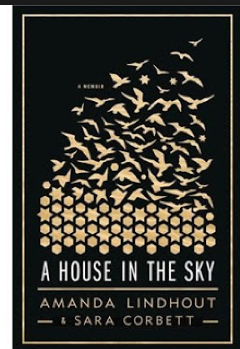
Several months ago I read an article in The New York Times by Amanda Lindhout about her kidnapping and 15 months in captivity in Somalia. Since reading that article, her book had been on my to-read list.  A House in the Sky by Amanda Lindhout and Sara Corbett was heart wrenching, but it also provided hope because of the way Lindout was able to forgive and understand that the people who kidnapped her were just boys who had grown up in a violent country. In some of her darkest hours of captivity when experiencing pain and abuse, she imagined herself in a house in the sky. The hope from the book also comes from knowing Lindhout went on to establish a foundation where she gives back to women and children and regularly advocates for and speaks about social responsibility and women's rights.


My growing and ongoing interest in culture and life in other parts of the world brought me to  My Accidental Jihad:  A Love Story. Krista Bremer's memoir of her marriage to a man from Lybia and her experimentation with Islam was fascinating. Fortunately, our public library had a copy of this book, so I checked it out and read it in a single day while flying out west for work. The fact that the book involved different locations was perfect for my own insatiable need to travel. Starting with Bremer surfing in California, moving to North Carolina, and visiting her husband's home country of Lybia, there are plenty of interesting cultural situations and geographical locales. 


While following stories of nonsensical violence in the news, I was reminded of the Congresswoman from Arizona who was shot in the head at a public event, so I picked up a copy of Gabby: A Story of Courage and Hope by Gabrielle Giffords and Mark Kelly from my local library and read it within a few days. You can read more about my thoughts on this book at the link above.


For years I have enjoyed reading about women (and men) who overcome great feats because of their determination, persistence, and desire to prove to themselves they can accomplish their dreams, so when we were discussing an education summit my workplace will organize in the fall, someone brought up Tori Murden McClure from Louisville, KY. As I researched this woman, I learned that she was the first woman to row solo across the Atlantic Ocean. Even though she failed on her first attempt, she persisted, tried again, and accomplished her goal. The story was inspiring because of the good reminder that we might not accomplish something the first time we try, but we absolutely must try again. We learn through our failures. It took me only a few days to read McClure's book, A Pearl in the Storm: How I Found My Heart in the Middle of the Ocean.


Feeling empowered after reading McClure's book, I decided to re-read the e-version of Trusting Teachers with School Success by Kim Ferris-Berg, Edward J Dirkswager, and Amy Junge. One of my professional goals in life is to be part of opening a teacher-powered school in Kentucky. I've been thinking about it and researching the possibilities for several years now, and most recently, I've met other teachers who are also interested. It's just a matter of time (and a ton of work ahead) now, but I'm ready.


My interest in the ocean and survival stories led me to Adrift: 76 Days Lost at Sea by Steven Callahan which I also read in e-version. Only after I read the book and was telling a colleague about it did I learn that Steven Callahan served as a consultant for The Life of Pi  (a movie I never did see). What I enjoy about books like this are the author/survivor's drive to live and survive under the most dire circumstances with little food and water and with the dangers of the ocean always present.


Goodreads has been a perfect application for me to explore books that interest me, so when Rebecca Solnit's book  The Faraway Nearby popped up as a recommendation for me based on my nonfiction reading interests I immediately checked it out from the library and spent a week reading this series of essays about stories and life. I found myself using post-its to mark passages about empathy, loss, and humanity. After reading the series of essays, I started back at the beginning of the book to read the one entire essay written in ticker fashion at the bottom of each page, and I loved the uniqueness of that essay format.


I'm already well into my July reads, so stay tuned.  Happy reading.

Tuesday, July 08, 2014

Beware of Individualized Instruction

Imagine a six year old child sitting in a cubicle for seven hours a day completing workbooks each day all year. When I see some people celebrate computer programs and students working at their own computers, I worry that some children will end up much like I did as a child. Now, I had many irregularities in my k-12 schooling, including the fact that kindergarten through high school graduation, I moved 22 different times in those 13 years and attended 10 schools, including 3 different schools my fifth grade year.  When I started school, I attended a public kindergarten with a teacher who dressed up like a pumpkin for Halloween. By the end of the school year, my parents decided it wasn't best for me to attend a public school where I could be influenced by secular thoughts. So, they enrolled me in a religious school that used ACE curriculum. Let me tell you what that looked like for the next five critical years of my life.  I sat (as did all the other children) in a cubicle for seven hours a day and completed workbooks (called PACES). We were not allowed to talk or turn around in our seats or we would receive demerits that would require us to miss out on our precious 10 minute breaks from the cubicle that were permitted one time in the morning and one time in the afternoon.  The rules were so strict that my young body had difficulty adjusting biologically and I even experienced a humiliating incident.

Each year we had to work through twelve workbooks (called PACES) for each basic subject.  We read passages, answered questions, and memorized passages or scriptures we had to recite orally to the adult monitors. At the end of each workbook we took a test that determined if we had memorized enough information from the workbook and could move on to the next workbook.  This, for the formidable years of my life, was my primary education.  Then, in the middle of fifth grade my family moved a few times.  The first time I again went to a religious school, but the second time, I went to a public school again for the first time since kindergarten.  Not only was I shocked by the non religious surroundings, I didn't know how to interact in a classroom setting either. My world was officially rocked--big time. I was behind academically because all that memorization of facts did nothing to ensure my understanding of fractions, evolution, or A Wrinkle in Time (all new topics I encountered in 5th grade). For the next five years I attended multiple public schools in several different states.  Then in my tenth grade year, I again attended one of those ACE schools and spent all of my tenth grade year in a cubicle memorizing meaningless facts. Fortunately, by then, I had become more well adjusted socially and I made great friends (one with whom I stay in contact to this day). By eleventh grade we were in another new state, and I was back in public school again where I thrived in career tech/business classes and was an active member of the FBLA.  Academically, however, I wasn't at the top of my game.  Sure, my grades were fine, but I took all basic classes and the easiest math and science courses I could to graduate.  My counselor told me I was a hopeless cause and would never go to college. (Boy, did that make me want to prove him wrong--and, of course, I did). Certainly, all the moves contributed to my mediocre academic performance, but I still believe the so-called individualized instruction I received in my early years put me on a pathway to struggle academically. The individualized workbook approach did not work for me at all.

Flash forward twenty years when I observed at a public school and heard the faculty proclaim with great joy how proud they were of the individualized instruction at their school. I walked in to see students sitting at computers completing online modules for their coursework.  I have to admit I shuddered inside because it took me back to those cubicles of my childhood where I had no learning interaction with classmates or a teacher. The only difference I could see was that they were doing their work using technology instead of paper and pencil. 

Earlier this week, when I read this blog post by Chris Crouch about the direction of learning, it reminded me of my childhood and my recent visit to the school where the faculty proclaimed innovative practice with technology. I became a teacher sixteen years ago so I could contribute to better learning systems than what I experienced, and I persist in the education field now because I want more children to have meaningful learning experiences.  Yes, we need innovation, but we also need authentic learning.


Wednesday, July 02, 2014

Professional Learning Journey


My days have been especially full since my last post, and though I thought often about posting a new blog entry, I have been deep in thought and in work, and haven't taken the time to write.  One of the opportunities I had last week was to participate in a state wide conversation about professional learning in Kentucky.  As preparation for that event, we were asked to prepare a timeline to represent our professional journey.  At the meeting, we shared our timelines, and my friend and colleague shared her creative professional learning timeline.  Not surprisingly, I was impressed and asked Cindy if she would share her timeline in a guest blog post to inspire others.  I know she inspired me, and I hope to re-think my professional journey using a similar format.  If you decide to do the same, I hope you will share.

Enjoy & never stop learning, creating, and leading!

Guest Post by Cindy Parker

“A child said, What is the grass? fetching it to me with full hands;
How could I answer the child...I do not know what it is any
   more than he.

I guess it must be the flag of my disposition, out of hopeful green stuff
   woven.

Or I guess it is the handkerchief of the Lord,
A scented gift and remembrance designedly dropped,
Bearing the owner’s name someway in the corners, that we may see
   And remark, and say Whose?” Walt Whitman, Leaves of Grass

When I started high school, my brother, who is 17 years older than me and a poet, introduced me to Walt Whitman’s poetry.  I remember pondering the strange, wonderful words and form contained in Leaves of Grass.  He has remained one of, if not my favorite poet. So recently, when assigned a task at work to create a professional learning timeline of my journey and experiences with teaching and education, I knew what best represented my journey—Whitman’s words.


I created my timeline using the preface in an old college-student edition purchased at Half-Price Books. My timeline began with my student teaching, then first year of teaching in 1988, both at Harrodsburg High School.  I circled the word “literature” because like all secondary English teachers, I thought that’s what I would be doing as a teacher—teaching the literature I loved. 


Throughout my timeline, I added the names of those who most influenced me as a professional.  In those first years, that was one of my college professors, who served as my university supervisor during student teaching, Jan Isenhour, who would later serve as my instructor in the Bluegrass Writing Project, and who I admired greatly throughout my teaching career.  The second name at the beginning of the timeline is Don Pelly, a biology teacher who served as my KTIP (internship year) mentor.  He was a great mentor, colleague and is still someone I am honored to call a friend, even after we both left HHS in 1998.


A few other highlights from my timeline are colleagues I’ve mentored, such as Monica. I circled “Past and present and future…” because we have continued to work and learn together as friends and colleagues since her first year at Washington County and now at the Kentucky Department of Education.  NBCT appears on my timeline for 2002, the year I achieved National Board Certification, one of the best professional learning experiences I engaged in as a teacher. Renee Boss is among the names recorded along my timeline because of her influence on my growth as a professional, as a colleague whose vision and enthusiasm encourages me, and as someone I love to learn alongside and call a friend.

Something I noticed about my timeline is that the last few years have been packed—with people, with activities, and with new learning.  I circled “progress” and wrote “coherence” as the bringing together of all of this learning. It’s been an exciting time in the last few years to be in education with so many changes.


The final words of the preface sum up this phase of my career, as I enter my 27th year in education and continue to learn, grow, and meet new challenges.  Many find Whitman’s focus on the individual boastful and audacious; I find it refreshing and uplifting and what an educator should strive to be:

“An individual is as superb as a nation when he has the qualities which make a superb nation. The soul of the largest and wealthiest and proudest nation may well go half-way to meet that of its poets.  The signs are effectual. There is no fear of mistake. If the one is true the other is true.  The proof of a poet is that his country absorbs him as affectionately as he has absorbed it.”